Riding Again After a Serious Leg Injury: Enter the Three-Wheeled Goblin
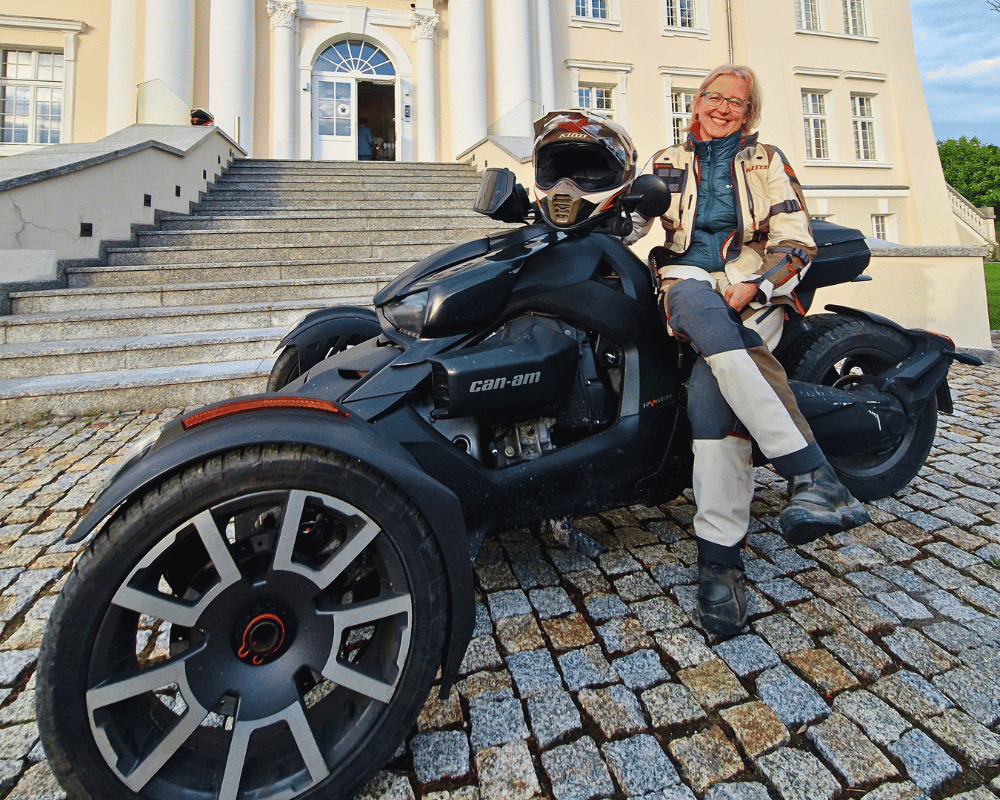
Riding after a leg injury can look very different from the way it did before the accident. In our case, one way to regain that sense of freedom on the road was the Can-Am Ryker — a three-wheeler that does not require you to support the machine with your leg at a stop and places very different physical demands on the rider than a conventional motorcycle.
This article is based on our own experience of returning to riding after a serious leg injury and putting the Can-Am Ryker through its first real miles. We look at what genuinely makes riding easier, what feels strange at first, which limitations still matter, and why three wheels can become a surprisingly good way back to what we love most about riding — movement, the open road and the wind in your face.
Riding After a Leg Injury – Where Do You Start?
There are many stages in recovering from a serious knee or lower-leg injury. First comes denial: “It is probably just a tweak,” you say, while your leg has roughly the structural strength of a wet breadstick.
Then comes bargaining. “Maybe I can still ride if I simply never put that foot down.” An excellent plan, except that motorcycles are famously fond of tipping over when stopped.
Then comes the long, grim stretch of ice packs, physiotherapy, orthopaedic appointments and late-night searches for phrases such as “how long until I can bend my knee without seeing God?” Eventually, if you are a motorcycle person, one question starts gnawing at you: how do I ride again when one of my legs has resigned from active duty?
This can apply after a catastrophic knee injury, a broken ankle, a fractured tibia or fibula, or almost any lower-body disaster. The motorcycle itch does not politely wait for your connective tissue to finish rebuilding its bridge back to civilisation.
The Problem With Two Wheels After a Bad Leg Injury
A conventional motorcycle is beautiful because it is simple: two wheels, an engine, handlebars and the constant background possibility of dropping the whole arrangement.
That simplicity is also the problem. Once a motorcycle is moving, it generally wants to remain upright. The difficult moments often come before and after the romantic part: swinging a leg over, holding the bike at traffic lights, putting a foot down on uneven ground, reversing out of a parking space and catching a lean before gravity wins.
A healthy rider barely notices these tasks. An injured rider thinks about every one of them, usually while sweating through an expensive pair of motorcycle trousers.
The Ryker Changes the Equation
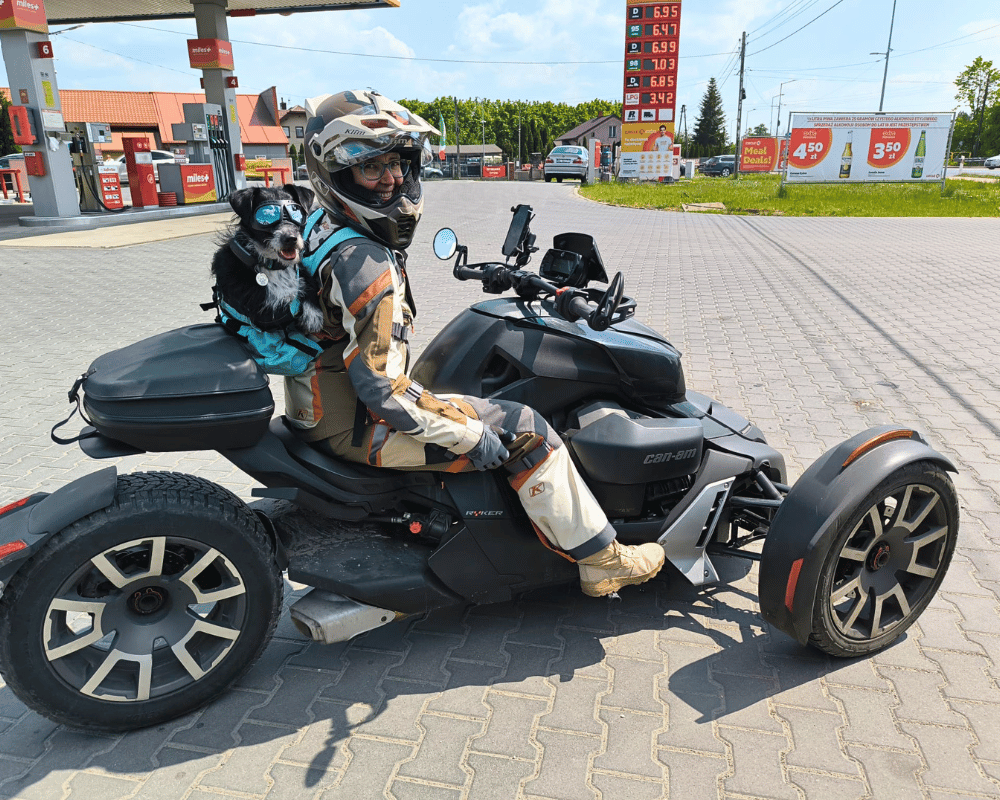
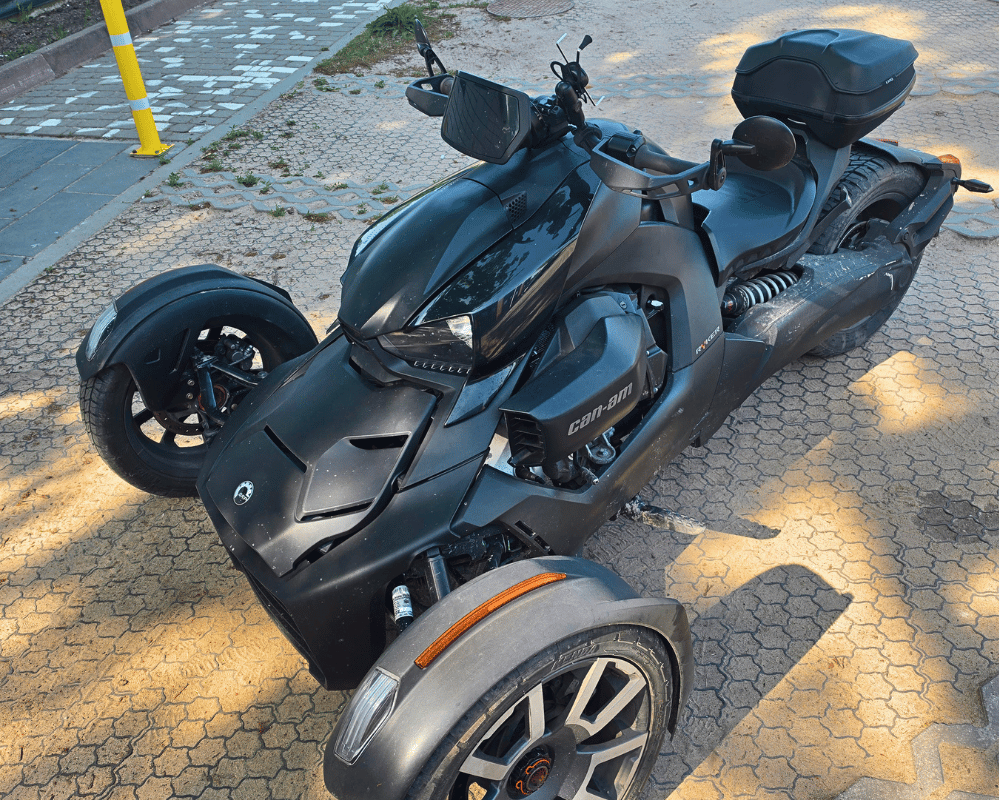
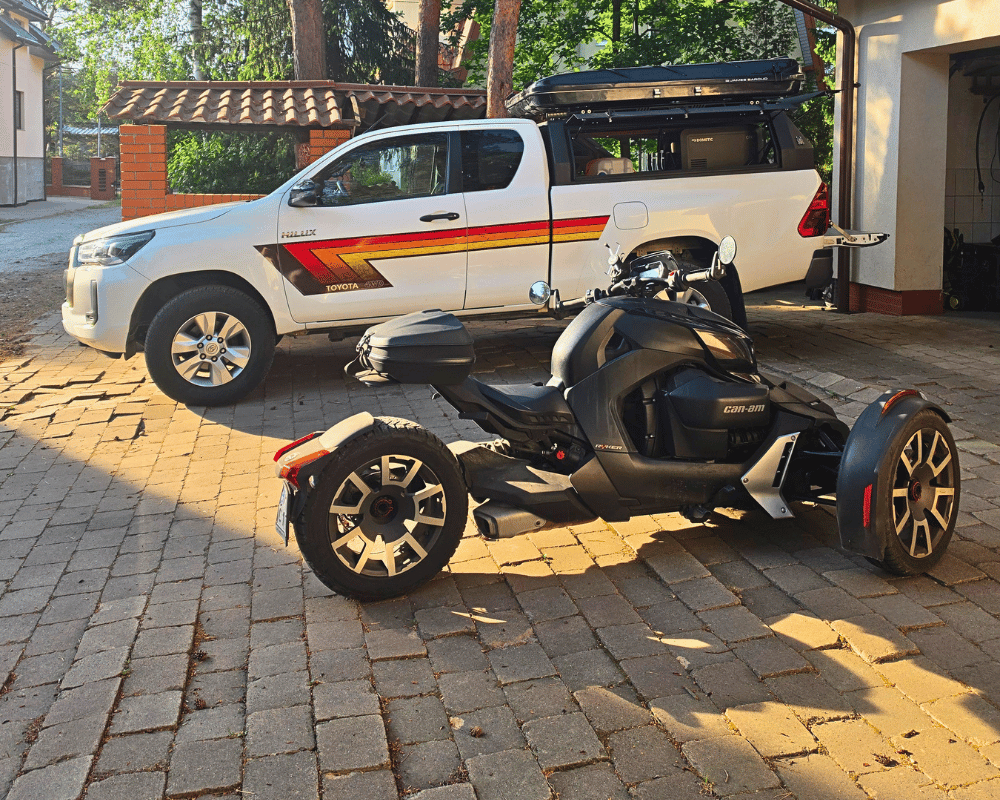
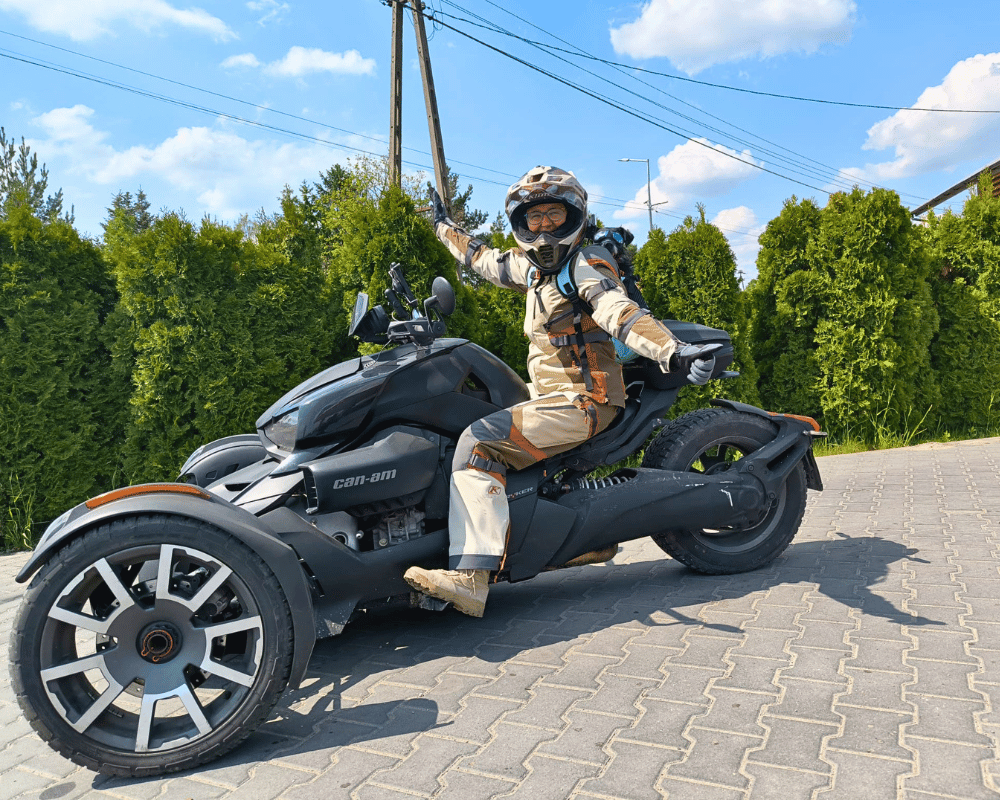
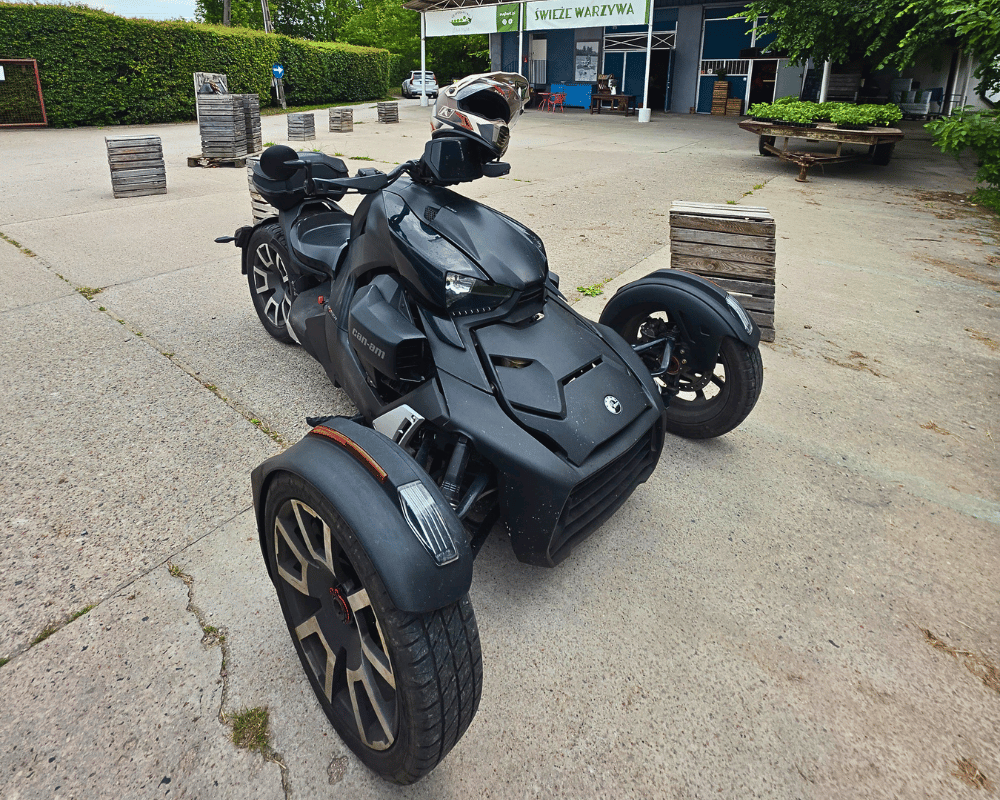
The Can-Am Ryker is not a motorcycle in the traditional two-wheeled sense. It is a three-wheeled roadster with two wheels at the front and one at the rear, giving it the stance of a futuristic Batmobile.
You do not have to balance it at a stop. That alone is enormous. At a red light, there is no frantic calculation about which foot should go down, how much weight the injured leg can take or whether the camber slopes the wrong way. You stop, and the machine stays upright. You sit there like a civilised person instead of an anxious flamingo.
For someone returning from a serious lower-body injury, that can be the difference between “I may be able to ride again” and staring mournfully at a motorcycle in the garage while its battery slowly dies.
Important: It Is Not Automatically Suitable for Every Injury
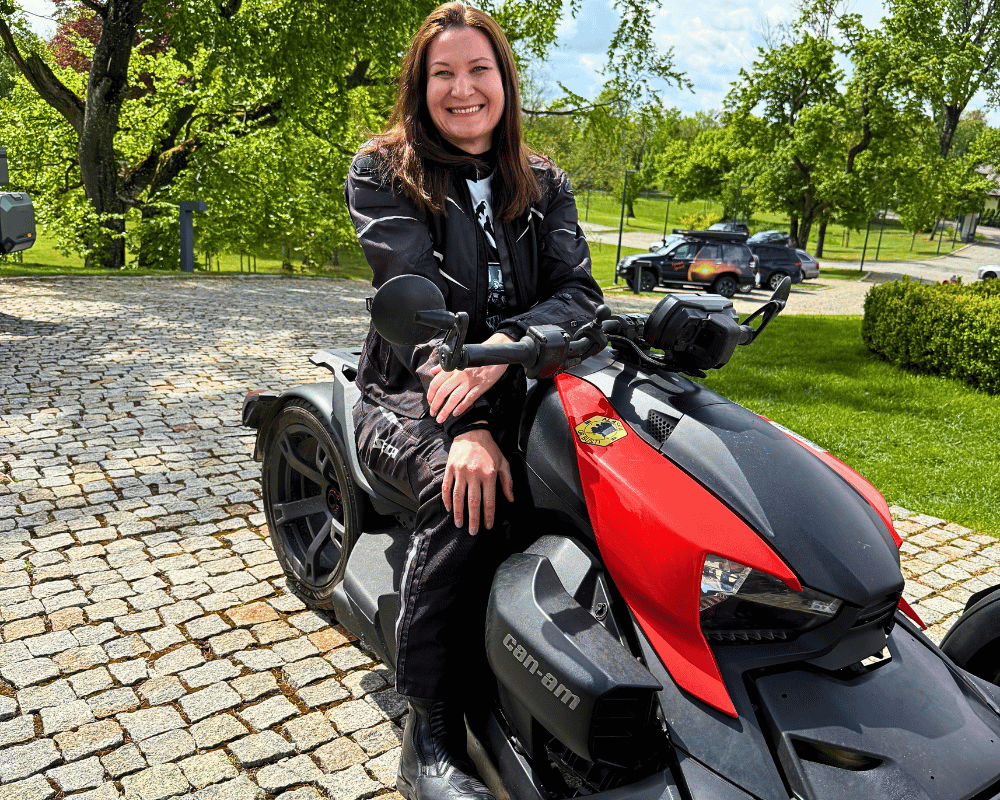
Before this turns into a prescription from Doctor Internet, there is a major caveat. A standard Ryker uses a right-foot brake pedal to operate its three-wheel braking system. If your right knee, ankle or foot is affected, the machine may still be unsuitable without an approved adaptation. You also need enough mobility to mount it, enough core and upper-body strength to steer it, and the reactions to control it safely.
Speak to the clinician overseeing your recovery and, ideally, arrange a stationary assessment or supervised test before buying anything. Local licensing and vehicle-modification rules also matter. The Ryker removes the need to balance a heavy bike; it does not remove every physical demand.
The Acceleration Will Knock Your Socks Off
Let us get one thing out of the way: the Ryker is not a sad medical scooter with handlebars. It moves. The response is immediate, punchy and slightly rude. Twist the throttle and it launches with the enthusiasm of a Labrador that has spotted a squirrel.
That matters because riders often fear that moving to three wheels means giving up the thrill. It does not. You still have the wind, engine response, open-air exposure and the magnificent sensation that your ancestors survived long enough for you to do something this unnecessary.
The difference is that when you stop, the machine does not ask your recovering leg to become a load-bearing structural component.
It Feels Strange in Corners—At First
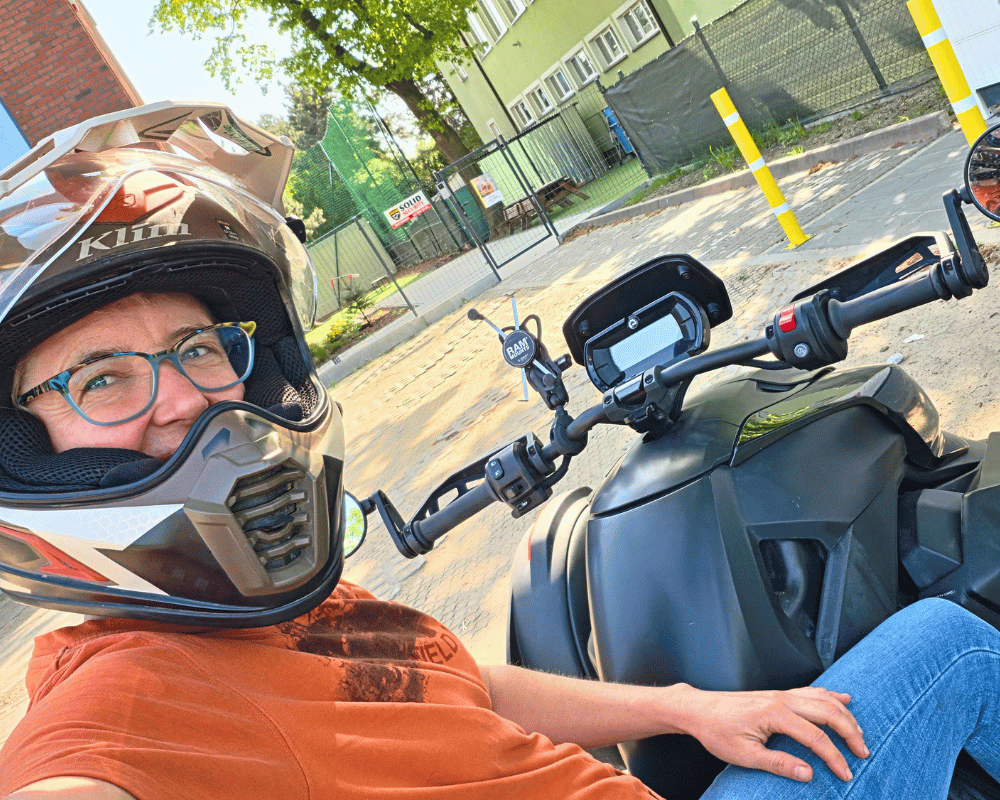
A Ryker does not corner like a motorcycle. On two wheels, you lean and the bike leans with you. On a Ryker, the machine stays comparatively flat and you steer it more like an ATV, snowmobile or extremely spicy go-kart.
The first few bends may feel awkward because your motorcycle brain expects one response and receives another. You will learn to brace through your core, shift your weight appropriately and work with the steering rather than trying to force the machine into a two-wheeled ballet.
Start in a quiet car park. Learn the throttle, braking and turning radius. Discover how wide the front tracks and how the vehicle responds when you accelerate out of a bend. Do not collect the keys and immediately attack a mountain road as if auditioning for a documentary called My Orthopaedic Saga.
It Is Wide. Do Not Kiss the Kerb
The Ryker has two front wheels, which means it is much wider than the line your motorcycle instincts are used to placing. Those wheels sit out like outriggers, ready to meet kerbs, potholes, pump islands, road debris and your overconfidence.
When turning right, remember that the right front wheel is farther out than your brain may initially believe. In narrow lanes, construction zones, car parks and filling stations, you are no longer threading a needle. You are piloting a compact triangle.
The Joy of Not Putting a Foot Down
For an injured rider, the greatest relief is not only mechanical; it is emotional. You brake. You stop. You remain upright. That can mean less anxiety, less fatigue and less fear that every ride will end with a low-speed trust fall onto the pavement.
Even after bones and ligaments heal, strength, range of motion, reaction time and confidence may lag behind. A three-wheeler can be a useful bridge back into the riding world without demanding the same low-speed leg strength as a conventional motorcycle.
Is it the same? No. Is it still fun? Absolutely. Is it better than sitting at home watching riding videos while your own machine gathers dust? Unless melancholy is your hobby, probably.
The Automatic Transmission Helps
The Ryker uses an automatic continuously variable transmission (CVT) with reverse, so there is no clutch lever or conventional foot-operated gear change. For riders with a left-leg or left-foot injury, that can remove a considerable part of the workload.
You twist and go. Fewer control tasks can leave more attention for traffic, steering, braking and keeping those broad little front wheels away from civilisation.
Learn It as a New Machine
The Ryker may be easier in some respects, but it is not a toy and it is not a motorcycle with training wheels. It has its own steering feel, braking behaviour, cornering technique and footprint.
Practise emergency braking, tight turns, parking, reversing and low-speed manoeuvres. Build up from a quiet open area to short local rides and only then to longer or more demanding roads. Recovery is not less heroic because you approached it intelligently. Stupidity is easy and comes pre-installed.
And What Happens When Short Rides Are No Longer Enough?
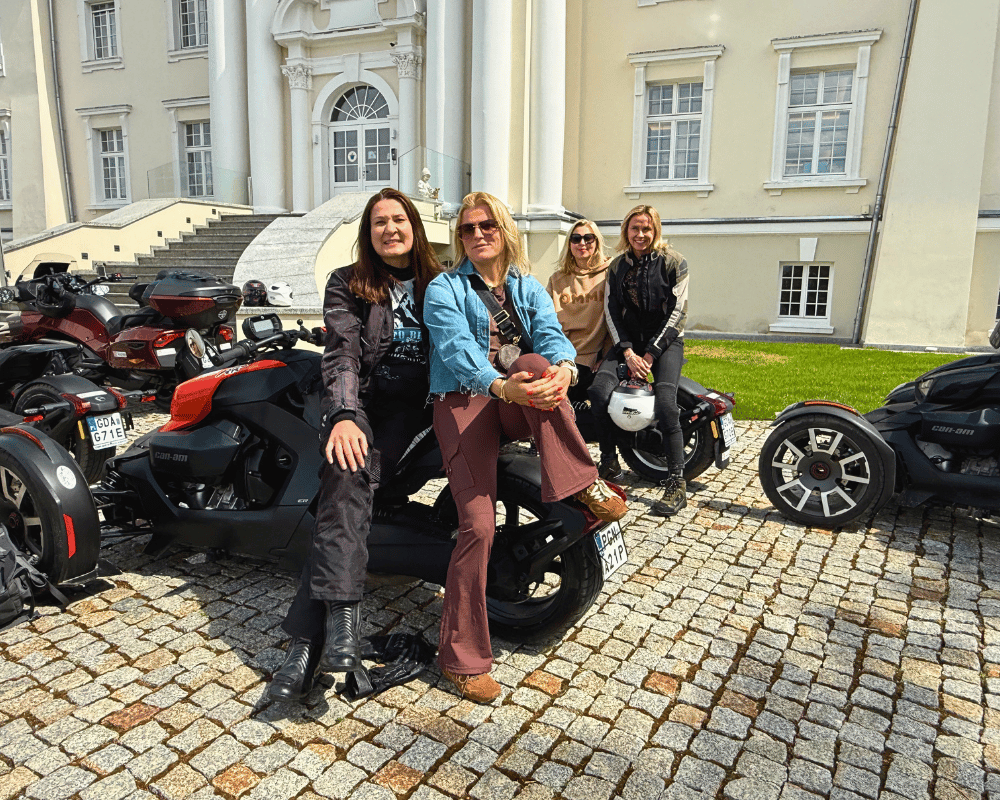
Getting back to riding does not have to end with short routes close to home. At MotoBirds, we recently experienced this in a very literal way — we transported our first three-wheeler from Kyrgyzstan all the way back to Poland.
So if, once you are back in shape, you start thinking about longer adventures on your own machine again, it is worth knowing that you can take it much farther than you could realistically ride it yourself.
MotoBirds has launched a new vehicle transport booking system, where you can check available destinations and dates, choose the transport option that suits you, and book online. If you are planning an unusual route or need transport on a different date, you can also request an individual quote.
But Is It Really Riding?
Some motorcyclists will ask the sacred gatekeeping question: “Does a three-wheeler count?” The correct answer is: who cares?
After a serious injury, the goal is not to satisfy a car-park philosopher who believes anything with more than two wheels is an appliance. The goal is wind, motion, freedom and a machine that makes you grin. If a Ryker gives you that without asking an unreliable leg to support 200 kilograms of motorcycle, it counts.

Practical Tips for Your First Rides Back
Start small
Use a quiet, open area and short sessions. Fatigue can change how accurately you steer, brake and react long before you notice it.
Respect the width
Consciously learn where the front wheels run. Your old motorcycle line will not work.
Take corners slowly
Give your instincts time to update their software before pretending you are in a chase scene.
Choose predictable surfaces
A standard Ryker is primarily a road machine. Even the Rally model has limits, and a recovering rider has no reason to seek them immediately.
Stop before you are exhausted
The desire to prove that you are back can be stronger than your recovering body. End the ride while you still feel in control.
The Emotional Part Nobody Talks About
A major injury changes your relationship with risk. Before it, you may have trusted your body automatically. Afterwards, you negotiate with it. You test it. You wonder whether it will hold. You suddenly notice joints that previously worked like silent employees.
Riding again can feel joyful and strange at the same time. You may be nervous, frustrated or embarrassed that you need a different machine. That is normal. Adaptation is not defeat; it is how people keep doing what they love after life throws a spanner into the machinery.
Final Verdict: Three Wheels, One Big Grin
Riding after a serious knee, ankle or leg injury is not something to rush. Your body needs time, your clinician needs to agree, and your ego needs to sit quietly in the corner.
When you are genuinely ready, a three-wheeler such as the Can-Am Ryker can be a brilliant route back. It is stable at stops, removes conventional gear changes and delivers enough acceleration to make you smile like an idiot. It feels different in corners and it is wide, so please—for the love of all things mechanical—watch the kerbs.
Most importantly, it can return something precious: the feeling of being back in the wind.
Newsletter subscribers get more!
Join MotoBirds Soaring Newsletter and don't miss any important content, gear tests, travel inspirations and newest offers in the future! We'll also let you know about fresh publications on our blog.