Chigee AIO-5 Play: The Device That Sent Our Garmin Into Early Retirement
Motorcycle GPS: A Small Box With a Surprisingly Large Bureaucracy
For years, dedicated motorcycle GPS units were the standard choice for many serious travellers. We used them too. They were rugged, waterproof and dependable, and the hardware was rarely the problem.
The problem was everything surrounding it. Route planning could involve BaseCamp, Explore, Tread, map files, USB cables and the occasional period of quiet reflection about why moving one GPX file had become a lifestyle choice. Garmin itself now lists the zūmo XT2 and XT3 as not compatible with BaseCamp and recommends the Tread app for managing their data.
None of that makes Garmin bad hardware. It does explain why we started looking for something simpler.
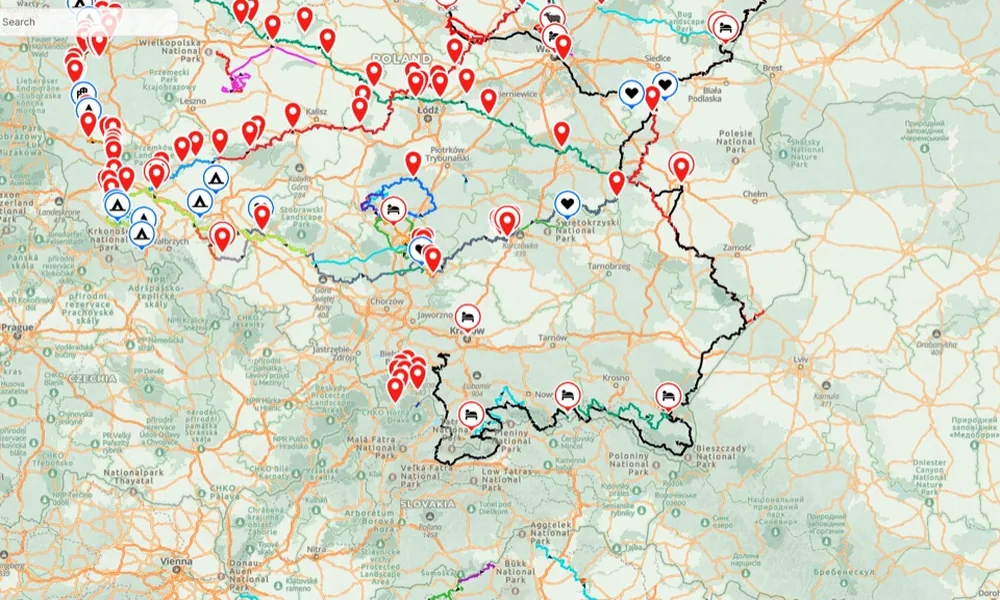
We had already written about using Garmin, Gaia and OpenStreetMap on the Trans Euro Trail in Poland. The navigation itself worked. Getting all the different pieces to cooperate was the part that occasionally required diplomacy.
Enter the Chigee AIO-5 Play
We bought the AIO-5 Play with a healthy degree of suspicion. Motorcycle electronics have a long tradition of promising to revolutionise your journey and then asking you to create an account, update firmware and restart something in a petrol station car park.
The Chigee turned out to be refreshingly boring in the best possible way.
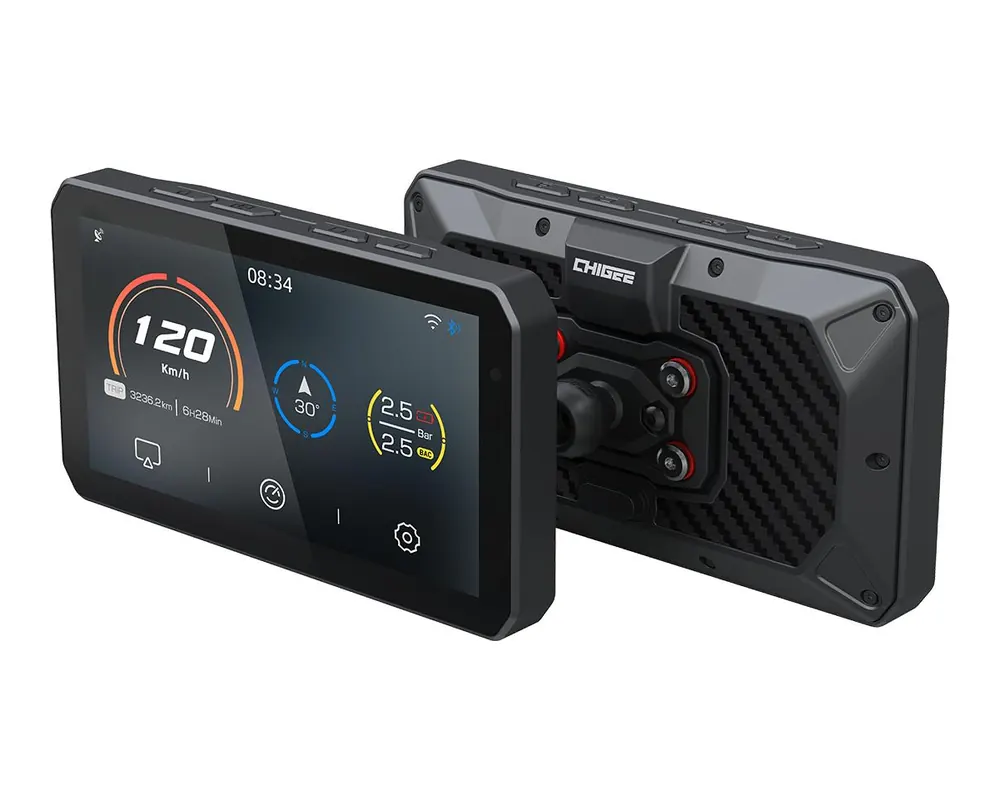
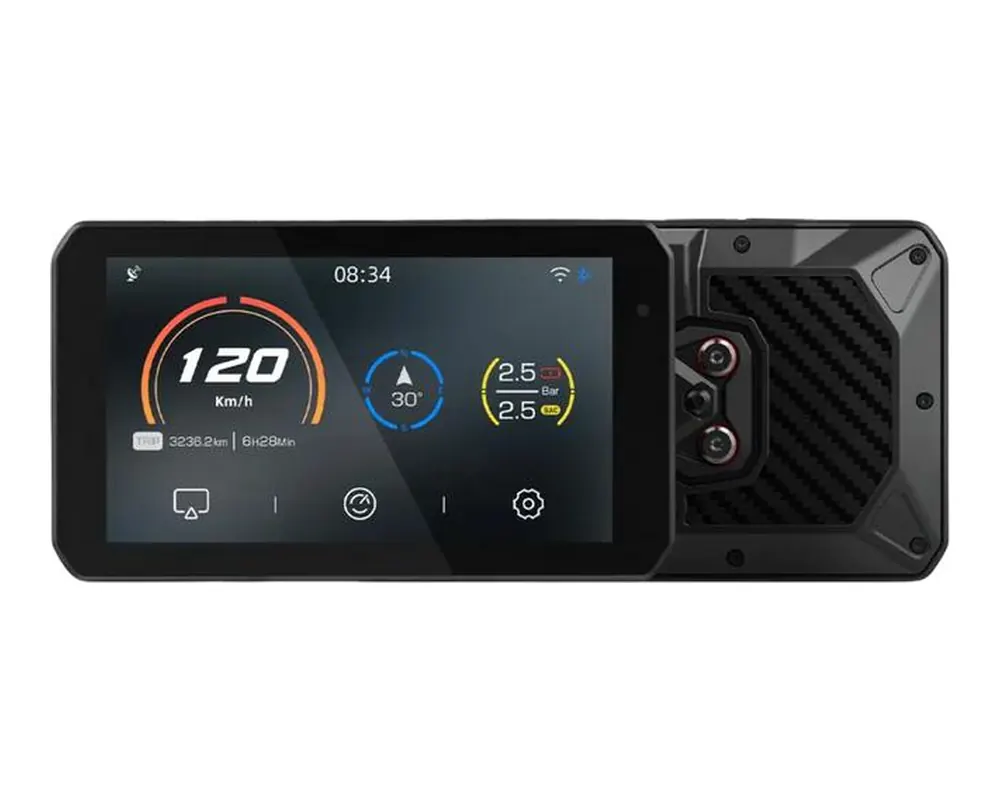
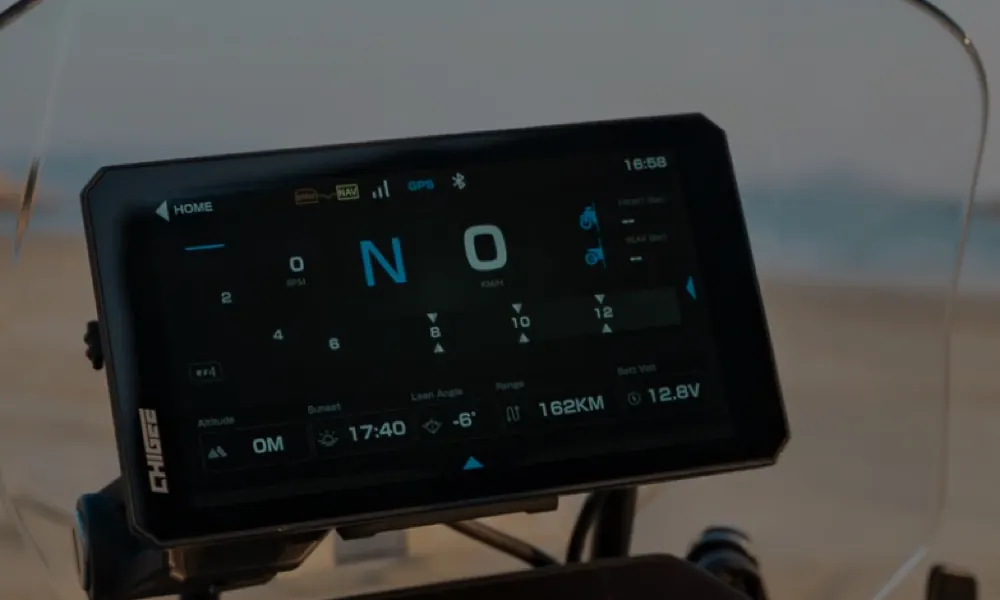
It is not a traditional standalone GPS and it is not really a head-up display. It is a rugged motorcycle display that brings compatible apps from your smartphone onto a five-inch screen using Apple CarPlay or Android Auto. Your phone remains the brains of the operation; the Chigee becomes the cockpit interface.
That distinction matters. You are not learning another mapping ecosystem. You are using the apps you already know.
Setup: Suspiciously Easy
Power it, pair the phone, select CarPlay or Android Auto and go. Once the initial connection is made, the unit can reconnect automatically when you start the motorcycle.
The phone can stay in a pocket or tank bag, away from direct rain, sun and handlebar vibration. This is particularly attractive if your smartphone costs more than some of the motorcycles we started travelling on.
The display works with touchscreen-compatible gloves, the interface is simple, and the unit can be powered from the motorcycle or by USB. The manufacturer lists IP68 protection for the AIO-5 Play, which is the sort of rating we prefer when the weather forecast has clearly given up.
Navigation: This Is Why We Bought It
In towns and on normal roads, we use Google Maps. In remote areas and for off-road route work, Gaia GPS is one of our main tools. With the Chigee, both can live in the same cockpit rather than requiring a separate GPS ecosystem.
Gaia GPS officially supports both Android Auto and Apple CarPlay, including offline maps when they have been downloaded to the phone beforehand.
There are platform limitations. CarPlay and Android Auto decide what an app is allowed to show while you are moving, and not every phone app behaves identically on the display. Gaia, for example, has some route and track restrictions depending on the platform. The Chigee cannot repeal Apple or Google policy, unfortunately.
But for our way of travelling, the important part is that route planning stays in the phone-based tools we already use. There is no extra ceremonial transfer to a dedicated GPS before departure.
Seven Weeks in South America: Time for the Nonsense to Stop
A navigation device can perform beautifully on a desk. So can most things. We were more interested in whether it would still work after several weeks of being shaken, soaked, frozen, roasted and covered in dust.
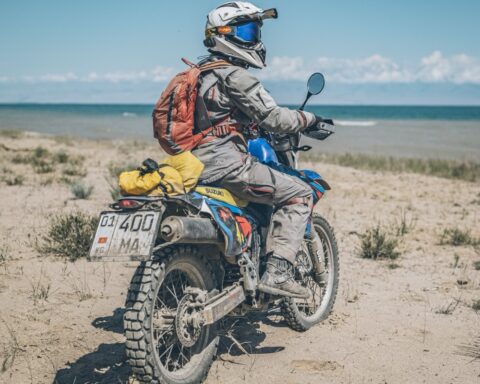
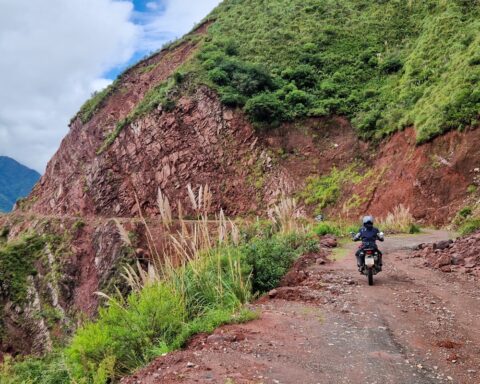
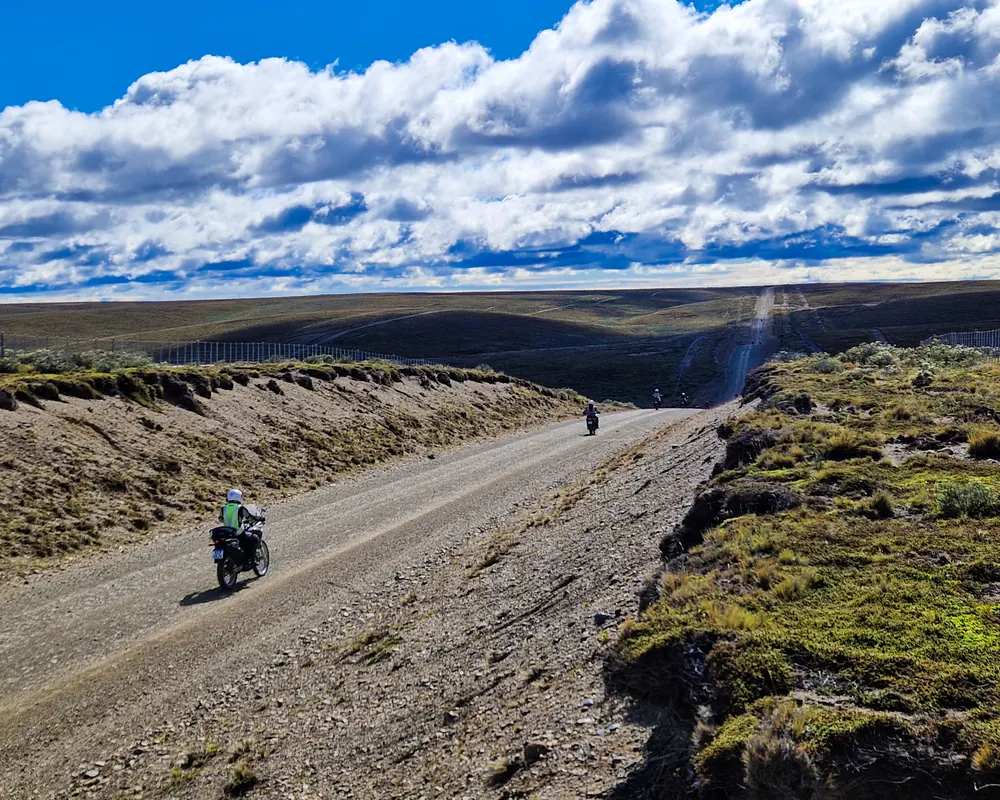
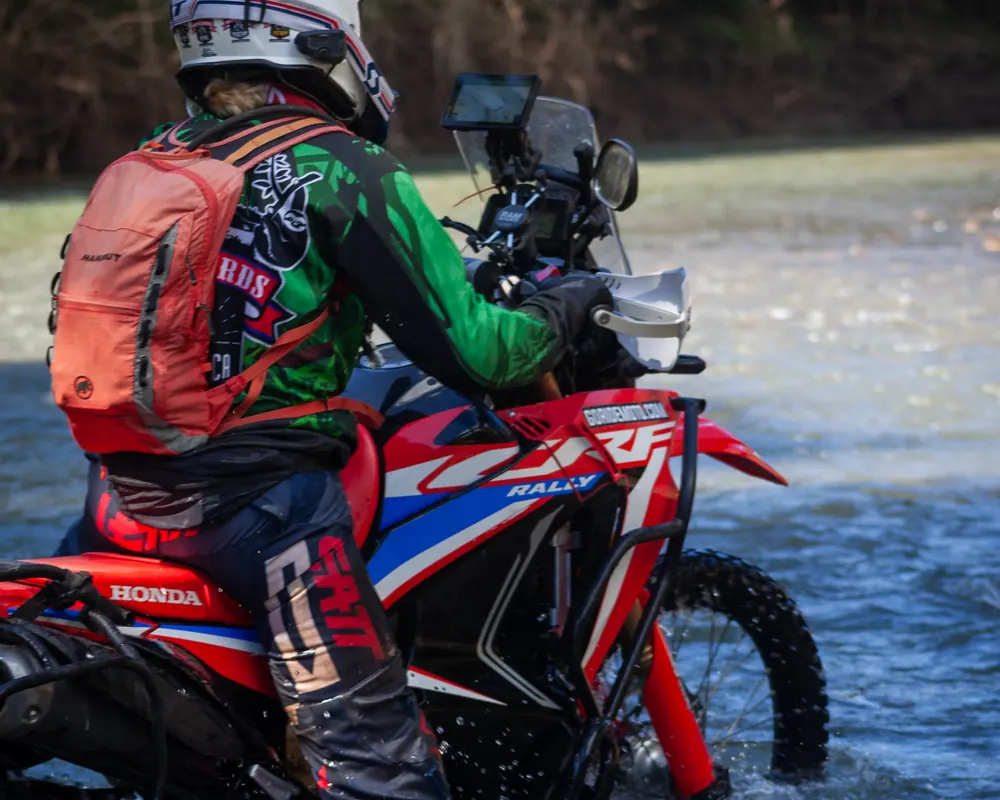
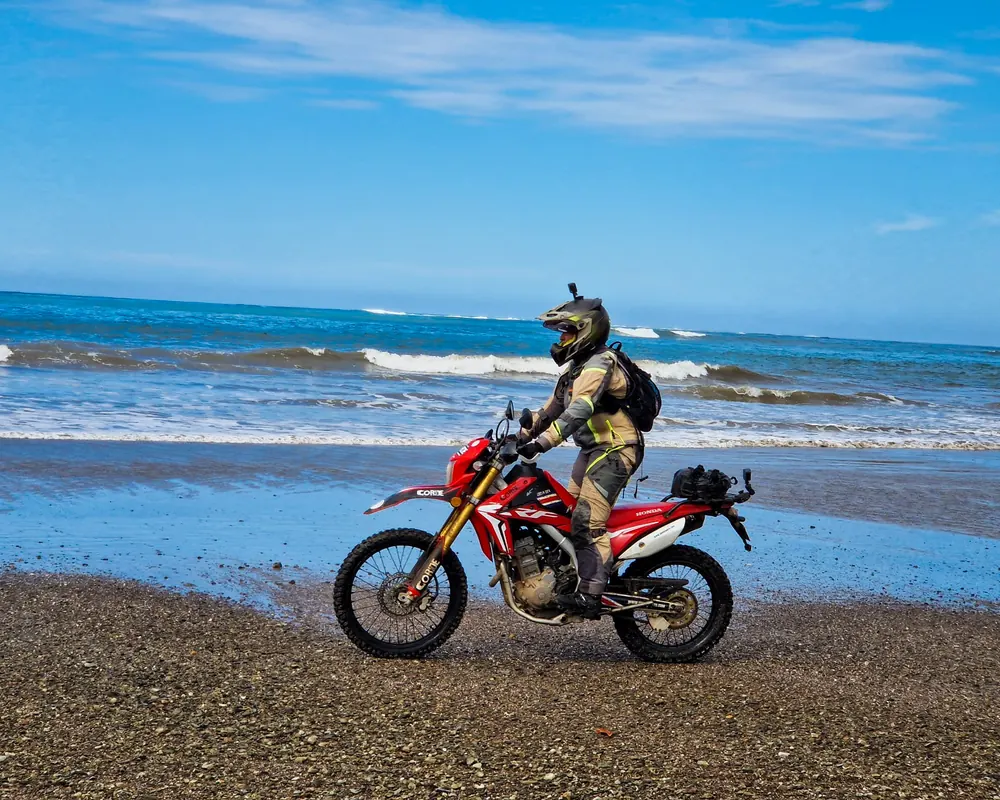
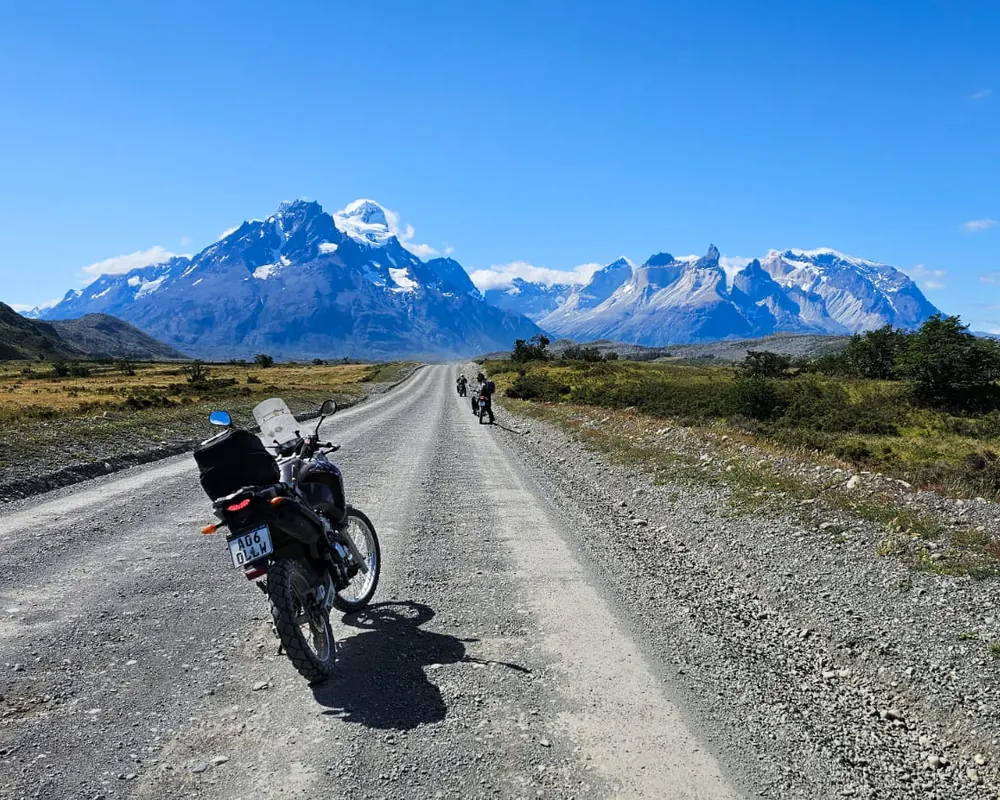
We used the AIO-5 Play for seven demanding riding weeks in South America. It saw rain, snow, dust, water and rough roads. Ambient temperatures ranged from roughly -5°C to 40°C.
It kept working.
That sentence is intentionally short. When equipment works properly on an expedition, there is often very little to write about. You stop noticing it. That is a compliment.
We did not spend evenings trying to recover corrupted routes. There was no need for a laptop to persuade two devices to speak to each other. The sacred ritual of unplugging a USB cable, restarting everything and trying again disappeared from our evenings as well.

The Phone Stays in Your Pocket
There is another advantage that matters more than it sounds. Modern smartphones do not particularly enjoy spending an entire day vibrating on handlebars in direct sun while simultaneously running navigation, charging and being sprayed with whatever the motorcycle in front has just ridden through.
With the Chigee, the phone can remain protected while you still have navigation, music and compatible communication controls in front of you.
Of course, the system still depends on the phone. If the phone dies, your very sophisticated motorcycle display becomes considerably less sophisticated. We therefore still download offline maps, carry power and keep sensible backup navigation when travelling remotely. Technology has not yet abolished common sense.
Chigee vs Garmin: Not Quite a Funeral
Garmin still makes very robust dedicated navigation hardware, and there are riders for whom a standalone GPS remains the right tool. If your system works, you know it backwards and you enjoy managing everything inside that ecosystem, there is no urgent need to throw it into the nearest hedge.
Our problem was workflow. We plan complicated trips, change routes, exchange GPX files and use different mapping sources. Over time, the number of applications and transfer steps around dedicated GPS units became harder to justify.
With the Chigee, the hardware becomes almost invisible. Google Maps remains Google Maps. Gaia remains Gaia. Spotify remains Spotify. The screen on the motorcycle is simply where we access them.
Our Garmins have therefore not been ceremonially buried. They are simply enjoying a very comfortable early retirement.
What We Like
The strongest feature is not a specification. It is the absence of friction.
Setup is fast. The phone stays protected. Familiar apps remain familiar. Maps can be kept current through the phone. Offline navigation is possible when the chosen app supports downloaded maps. The screen survived the conditions we threw at it.
And there is something deeply satisfying about preparing a route, getting on the motorcycle and seeing it where you expect it to be without first negotiating a peace treaty between software packages.
What It Does Not Do
The AIO-5 Play is not magic. It will not turn a bad GPX file into a good route. Nor will it create mobile coverage in the middle of nowhere. It will also not pick up your motorcycle after you have ignored the contour lines and discovered why the track was drawn that way.
Compatibility is also governed by CarPlay and Android Auto. Before buying it for one specific navigation app, check that the app supports the platform and the functions you actually need.
It is also a premium accessory, not a bargain screen from the mysterious end of an online marketplace. For somebody who only needs directions to the nearest café twice a month, it is probably excessive. For riders who travel often, the convenience starts making much more sense.
Who Is It For?
We think the Chigee makes most sense for riders who already plan and navigate with smartphone apps, especially those who switch between road navigation and more detailed adventure-mapping tools.
It is particularly useful if you travel far enough that protecting the phone matters, but you still want the flexibility of modern apps rather than a closed navigation ecosystem.
If you love your standalone GPS, keep using it.
The Verdict
After seven hard weeks, the AIO-5 Play did what we wanted: it made navigation simpler.
That sounds almost disappointingly modest for a piece of technology. It is also exactly the point.
We are not interested in adding electronics merely because a motorcycle still has an empty square centimetre near the handlebars. We want equipment that removes work. The Chigee removed several steps from our navigation routine while keeping the apps and maps we prefer.
For most of our riding, we would now choose this approach over a traditional dedicated motorcycle GPS.
Not because it gives us more technology.
Because, finally, it feels like less.
Want to Read More?
See the official Chigee AIO-5 Play page for current specifications, compatibility and accessories.
For more route-planning, equipment and real-world expedition articles, visit the MotoBirds blog.
Newsletter subscribers get more!
Join MotoBirds Soaring Newsletter and don't miss any important content, gear tests, travel inspirations and newest offers in the future! We'll also let you know about fresh publications on our blog.