Motorcycle Expedition Across the Altiplano: Argentina, Chile and Bolivia
Altitude That Takes Your Breath Away: A Motorcycle Challenge on the Altiplano
Can a 2,500-kilometre journey through the Andes be more than just a route on a map? This motorcycle expedition across Argentina’s vast high plains, Chile’s harsh Atacama Desert, and the lunar landscapes of Bolivia’s Altiplano is a test in which nature plays the leading role. It is a story of a road where temperatures drop below freezing, oxygen becomes a luxury above 4,000 metres, and mud and snow blockages can overturn even the most ambitious plans in an instant.
This article is a first-hand account of a 12-day expedition that proves real adventure is not about executing a flawless script. Although fickle weather closed the road to the summit of Uturuncu Volcano and made it impossible to ride the motorcycles onto the flooded Salar de Uyuni, it was precisely these unexpected twists — bureaucratic border crossings, the struggle through mud on the way to San Vicente, and the austere hospitality of villages cut off from the outside world — that created a story worth remembering. This is a read for those who seek authenticity in travel, appreciate the lightweight agility of the Yamaha XTZ 250 in demanding terrain, and know that the most unforgettable memories are born where the asphalt ends and the unknown begins.
A Motorcycle Expedition Across the Altiplano: Argentina, Chile, Bolivia and 2,500 km of Real Adventure
There are roads that stay with you forever. Without question, these are among them — routes that cut across the Andes, from north-western Argentina through Chile’s Atacama Desert, all the way to Bolivia’s Altiplano and the Salar de Uyuni.
During this motorcycle expedition, we covered around 2,500 kilometres through some of South America’s most unforgiving and spectacular landscapes. There was biting cold on the high mountain passes, rain, mud, altitude that stole your breath, and a natural world so raw and powerful that at times you felt utterly small in its presence.
It was meant to be an ambitious route: the highest passes, the Atacama Desert, the Bolivian plateaus, an attempt to reach Uturuncu Volcano, and a crossing of the Salar de Uyuni, the world’s largest salt flat. In the end, not everything went according to plan. And that is precisely what made this expedition feel so real.
THE PLAN WAS AMBITIOUS. THE REALITY WAS EVEN MORE COMPELLING
Our 12-day motorcycle expedition across the Altiplano both began and ended in Salta, Argentina. The plan was to cross the Andes into Chile, continue through the Atacama Desert and on across the Bolivian border, spend nights in remote settlements more than 4,000 metres above sea level, attempt the ascent of Uturuncu, then ride on to the Salar de Uyuni before returning to Argentina.
It sounds like the perfect script for a dream journey — and in many ways, it was. But the Andes have a way of reminding you very quickly that here, nature is the one calling the shots.
From the very first days, it became clear that this would not be a picture-postcard trip, but a full-blooded adventure: with detours, shifting plans, border surprises, and conditions that tested not only our riding skills, but our mental resilience as well.
THE JOURNEY BEGINS — FROM SALTA ALONG RUTA 40 TOWARDS THE ATACAMA
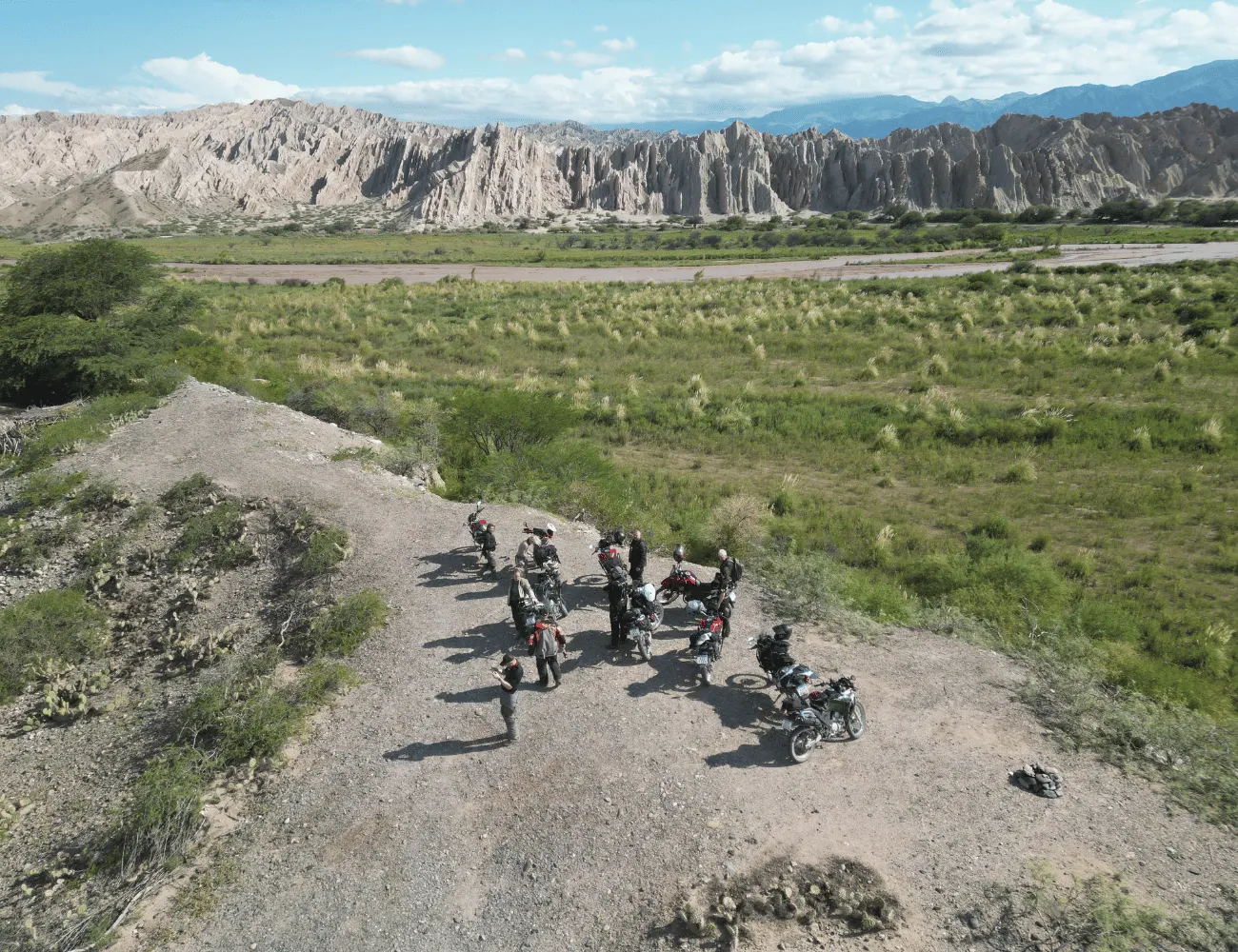
The first stage of the expedition took us from Salta to San Pedro de Atacama in Chile — around 1,000 kilometres over three days, via San Antonio de los Cobres and roads climbing high into the Andes.
Our group consisted of 18 riders. Most were from Poland, but there was also a German duo and one participant from Belgium. The overall riding standard was strong, and from the very beginning the atmosphere within the group was remarkably cohesive. That matters on a route like this, where the group needs to move efficiently and work well together.
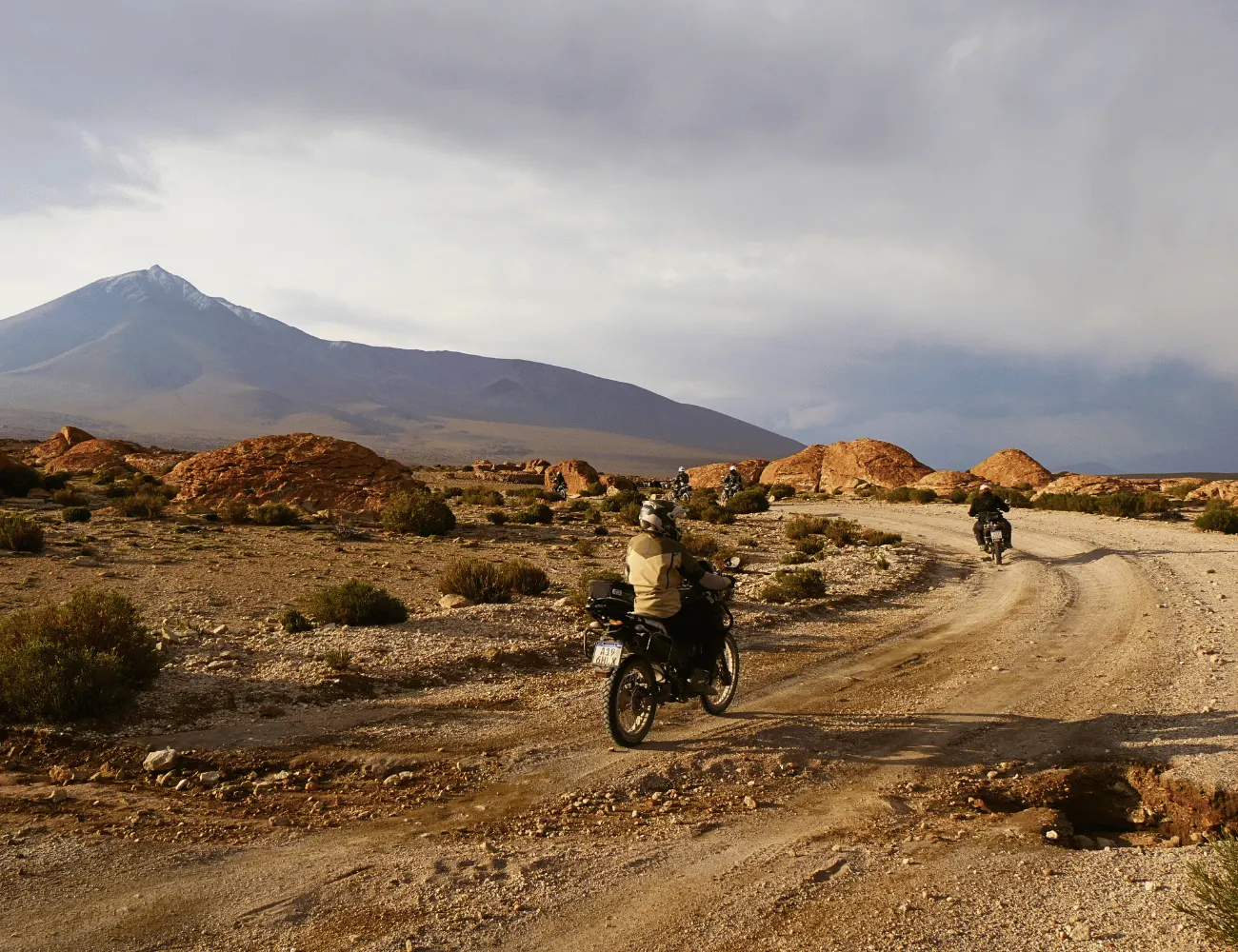
To begin with, we were given the perfect stretch of road to get used to our rental bikes — Yamaha XTZ 250s. Before long, however, one of the classics of this part of the world appeared: the legendary Ruta 40. Although much of the route is now paved, there are still old gravel sections that remind you why Ruta 40 has captured travellers’ imaginations for decades.
As soon as we left the Salta region behind and the asphalt began to give way to gravel, the group naturally started to spread out. Everyone found their own rhythm. And that was one of the great advantages of this expedition — although we were riding together, each of us could experience that immense landscape in our own way.
Under the guidance of Ola and Guy, our ride leaders on a KTM 690 Enduro, with the support vehicle bringing up the rear, we quickly felt that distinctive sense of freedom that only a long road through a vast landscape can give.
THE ANDES ARE NOTHING LIKE THE ALPS
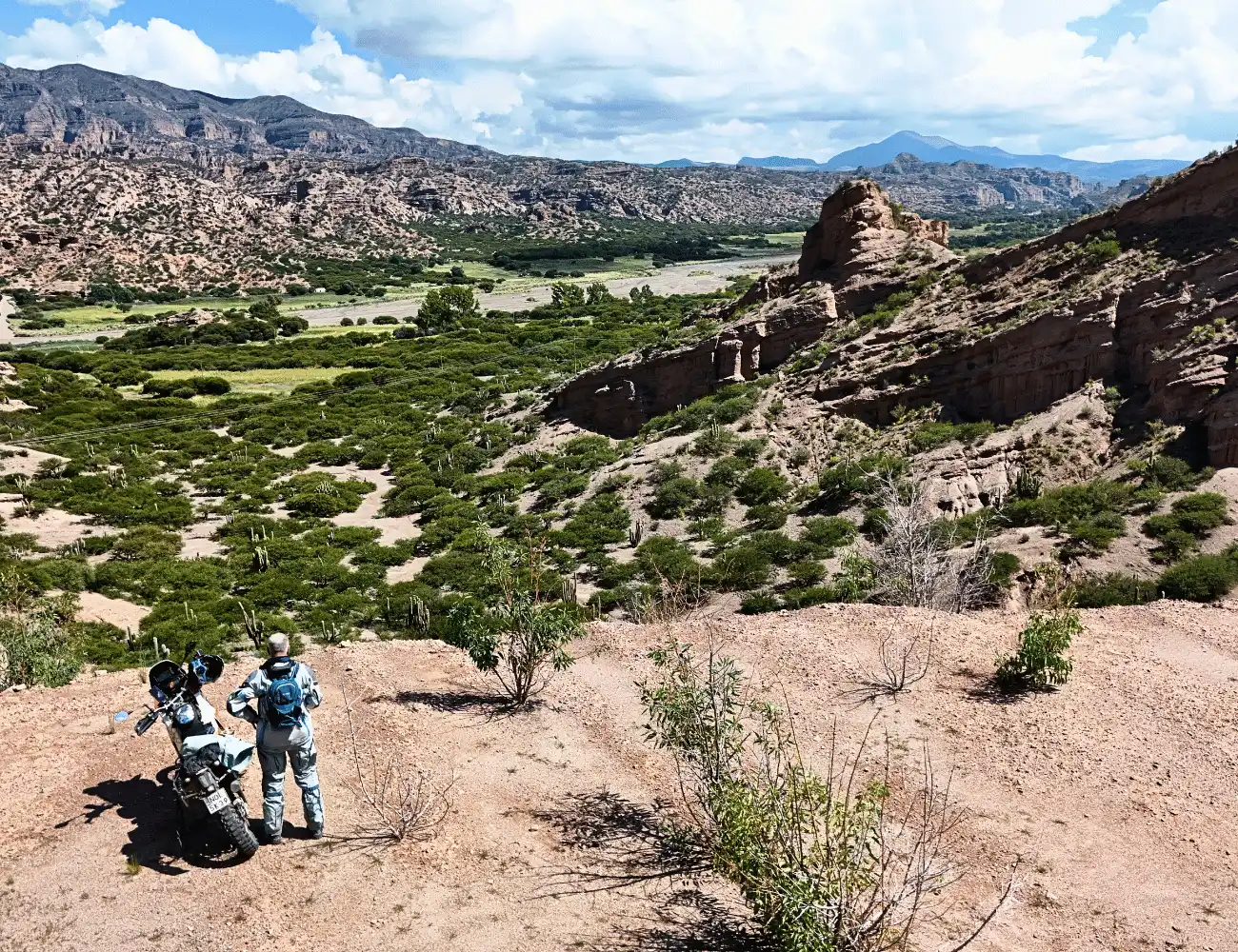
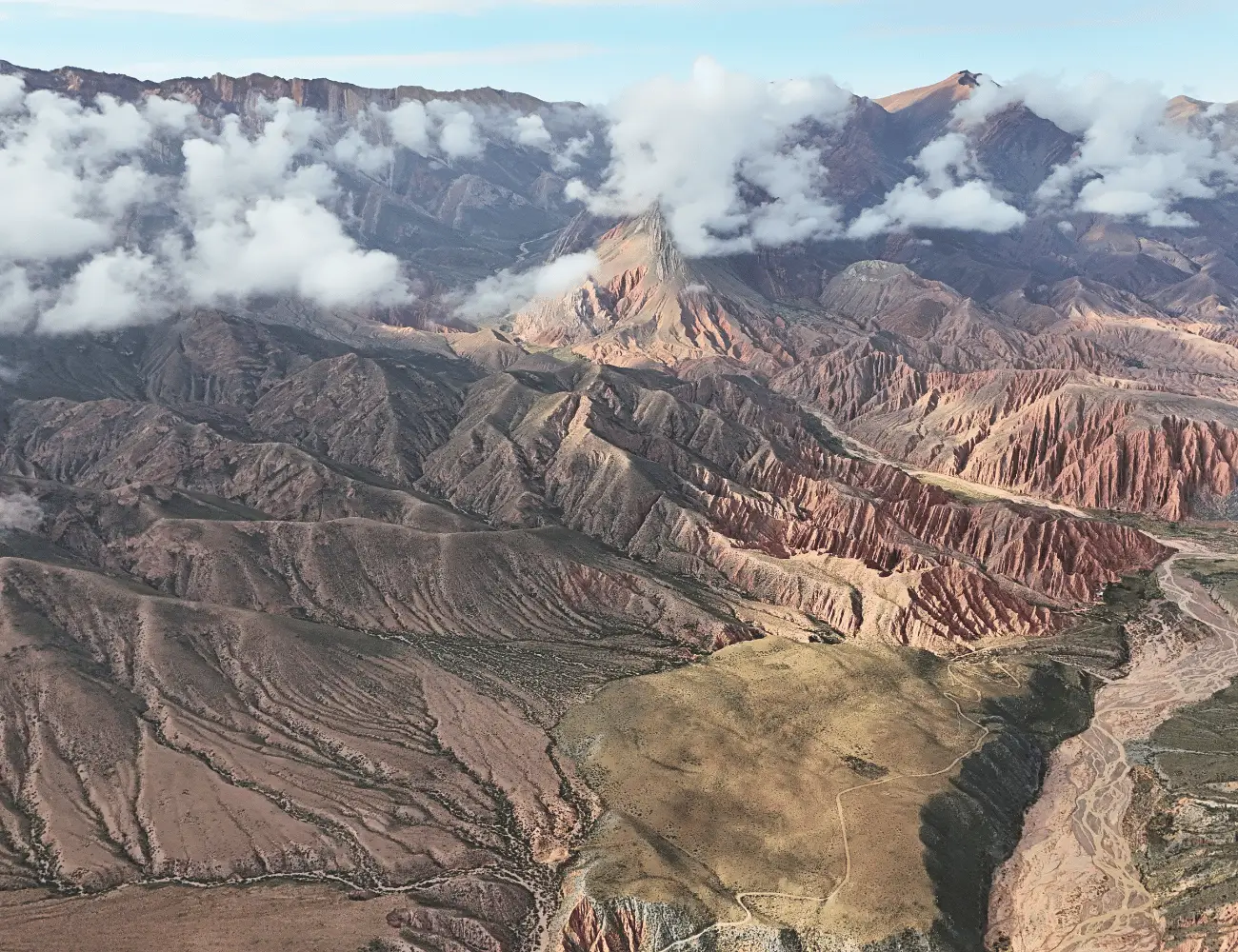
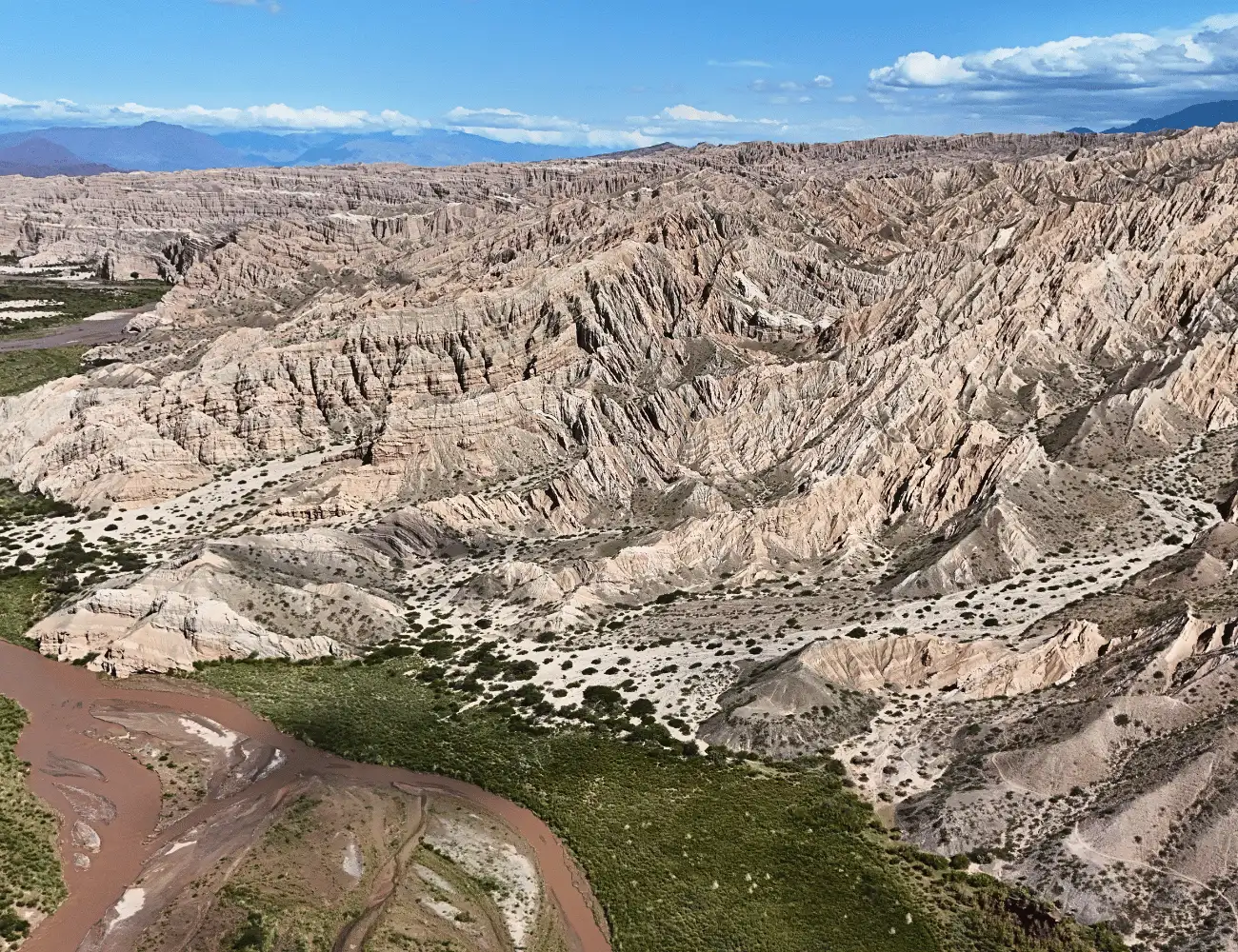
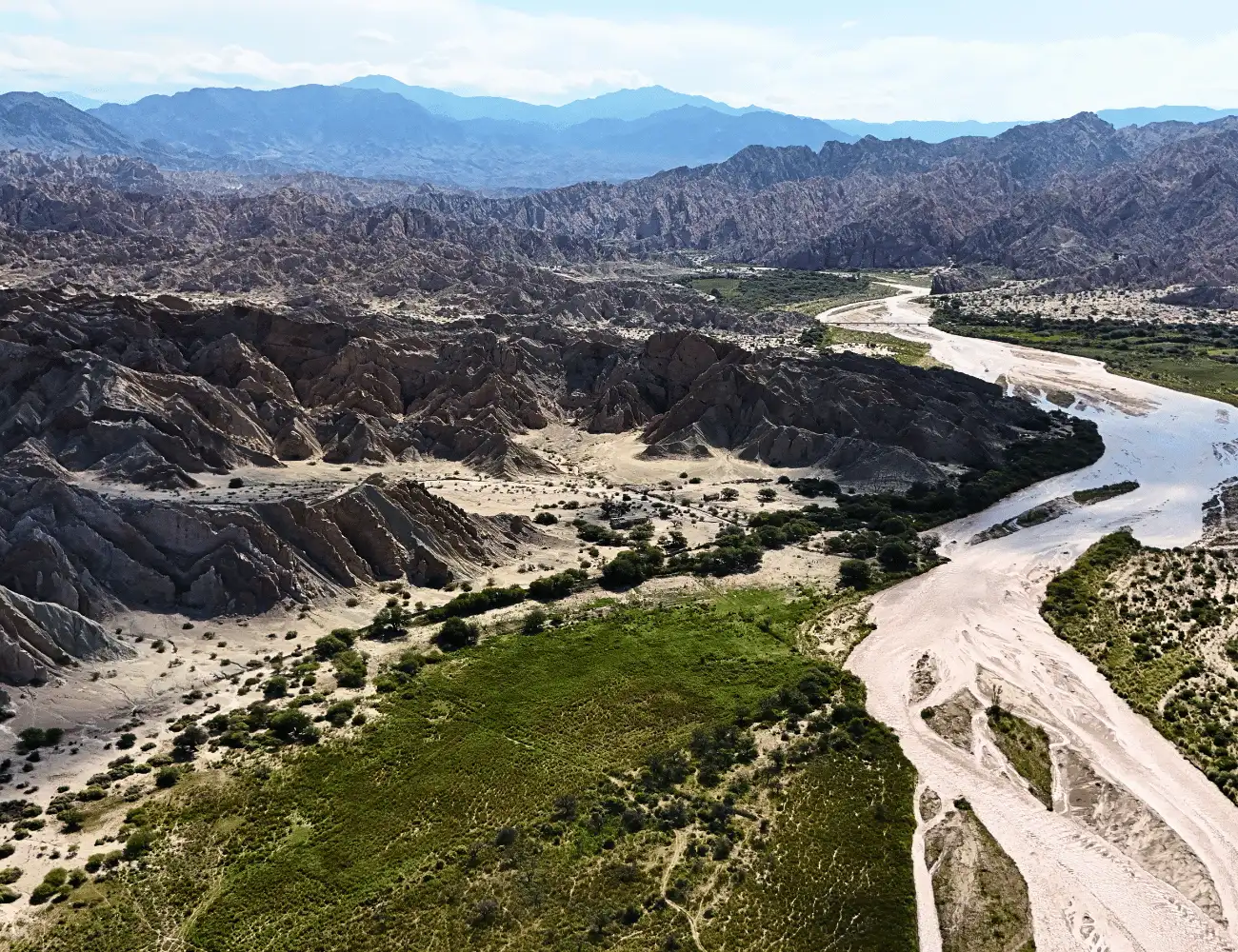
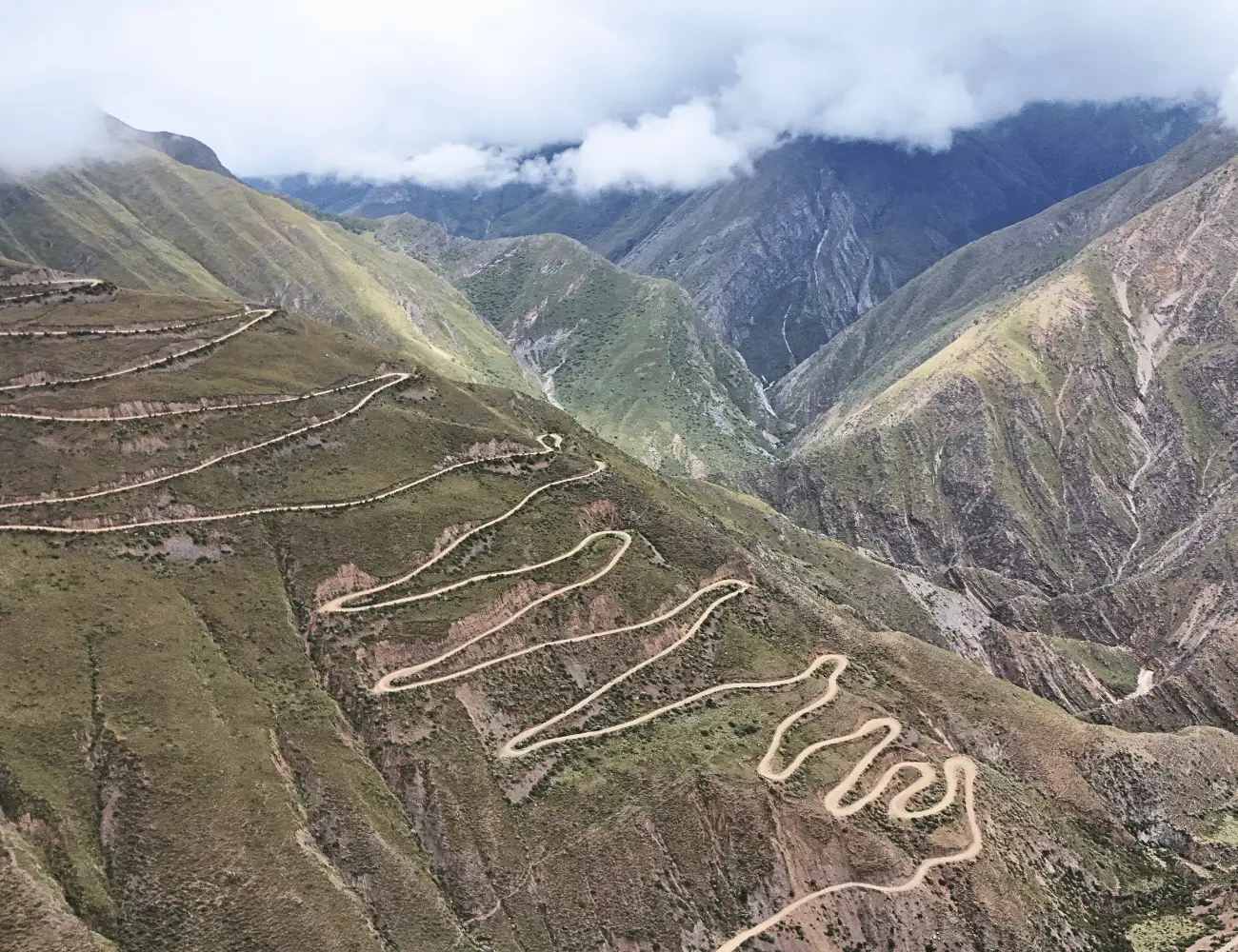
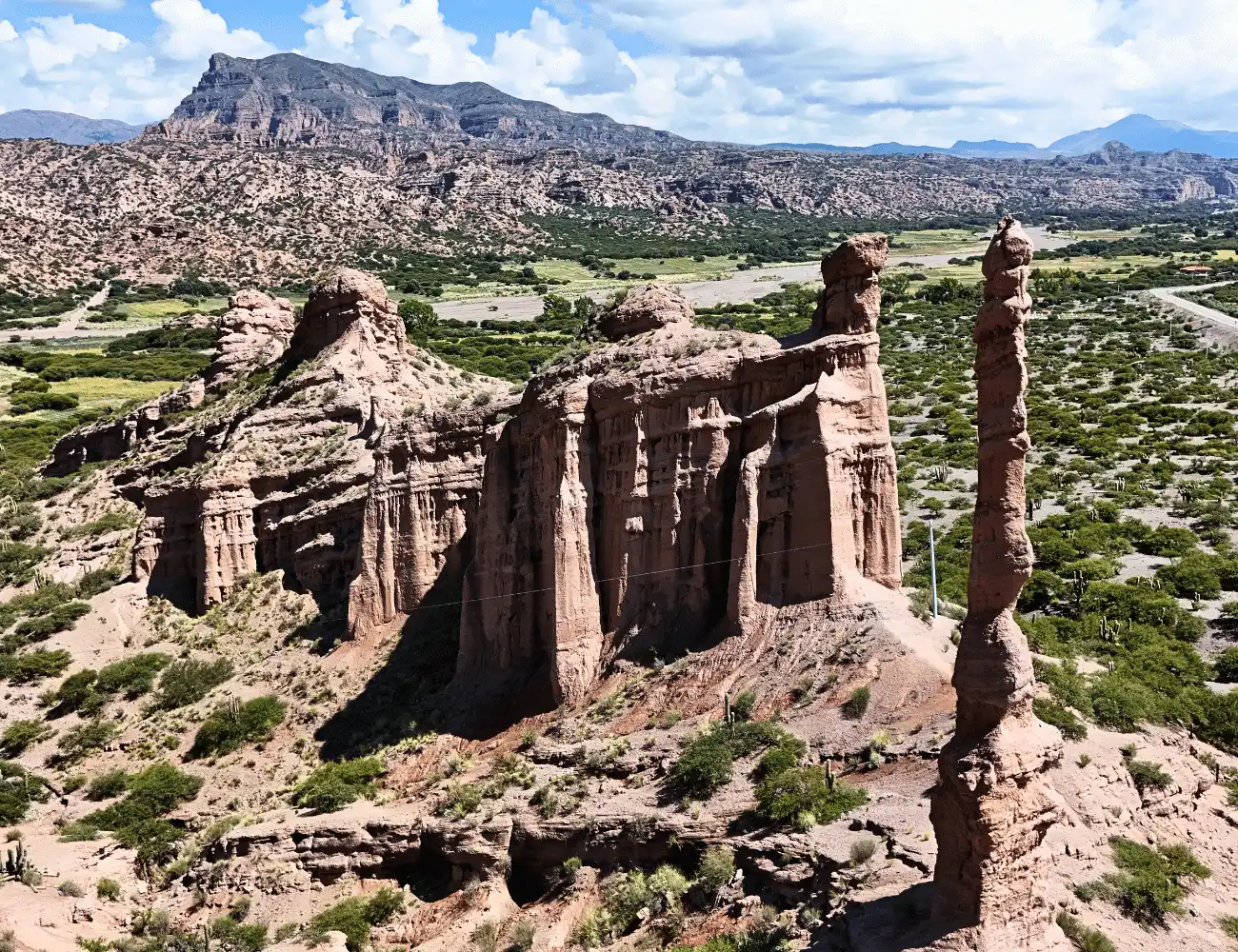
In this part of the continent, the Andes are nothing like the mountains of Europe. They have none of that postcard-perfect Alpine gentleness. Everything here is bigger, harsher and more exposed.
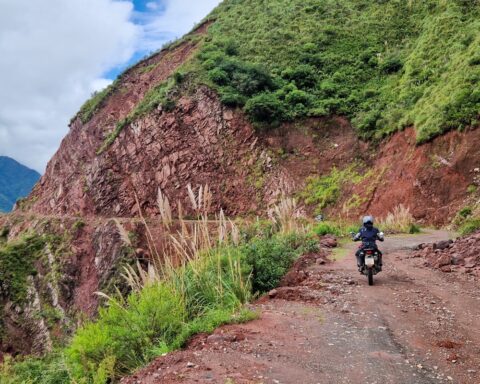
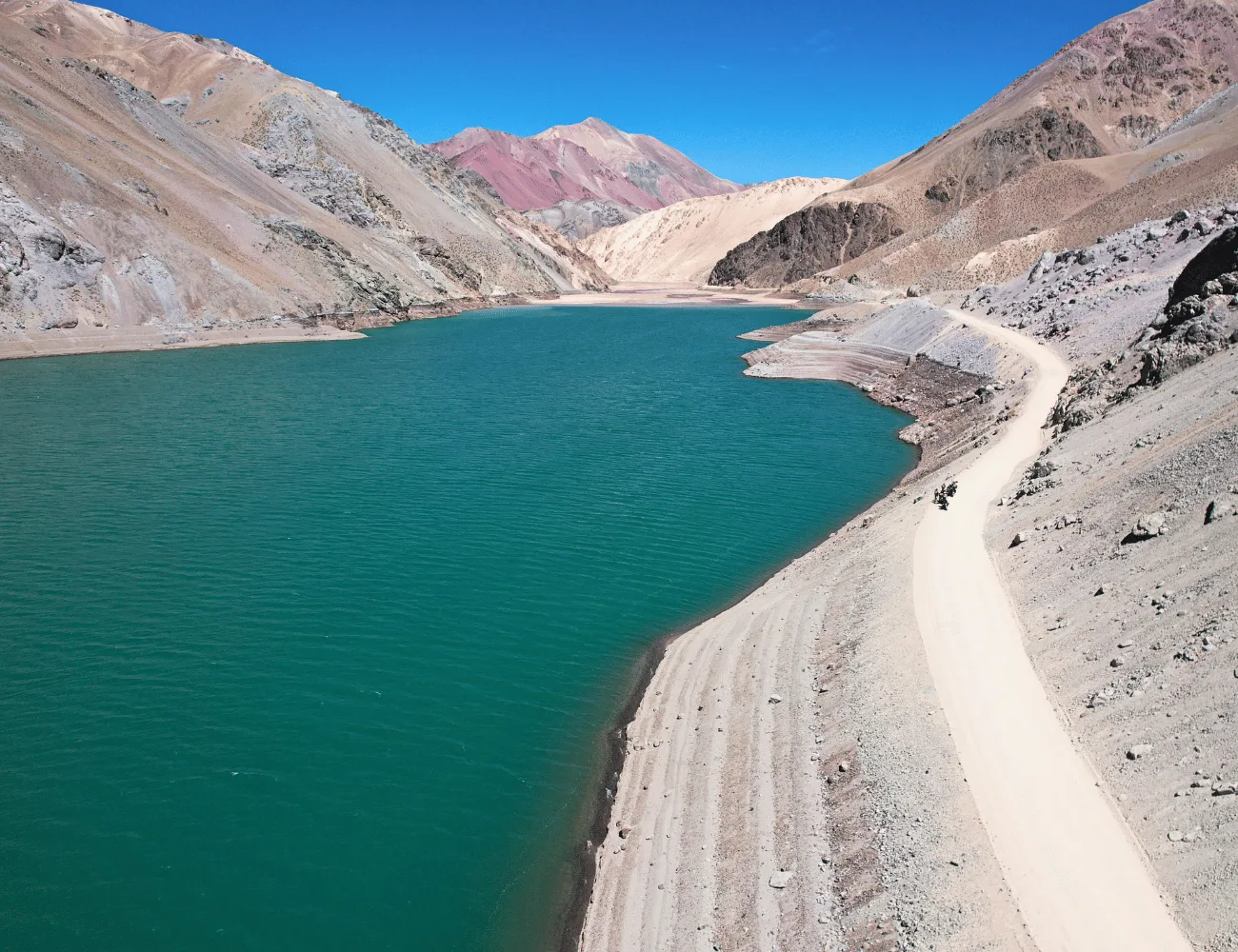
The colours shift with every kilometre: deep red rock gives way to muted green, then to greys, black and desert beige. The wind is a constant reminder that we are high in the mountains, and the landscape feels as though humans are merely accidental visitors here.
The plan was to ride up to Abra del Acay, one of the highest road passes in Argentina. Unfortunately, landslides and swollen rivers led local residents to advise against attempting the crossing. So instead, we took a detour — less heroic on the map, perhaps, but just as beautiful in reality.
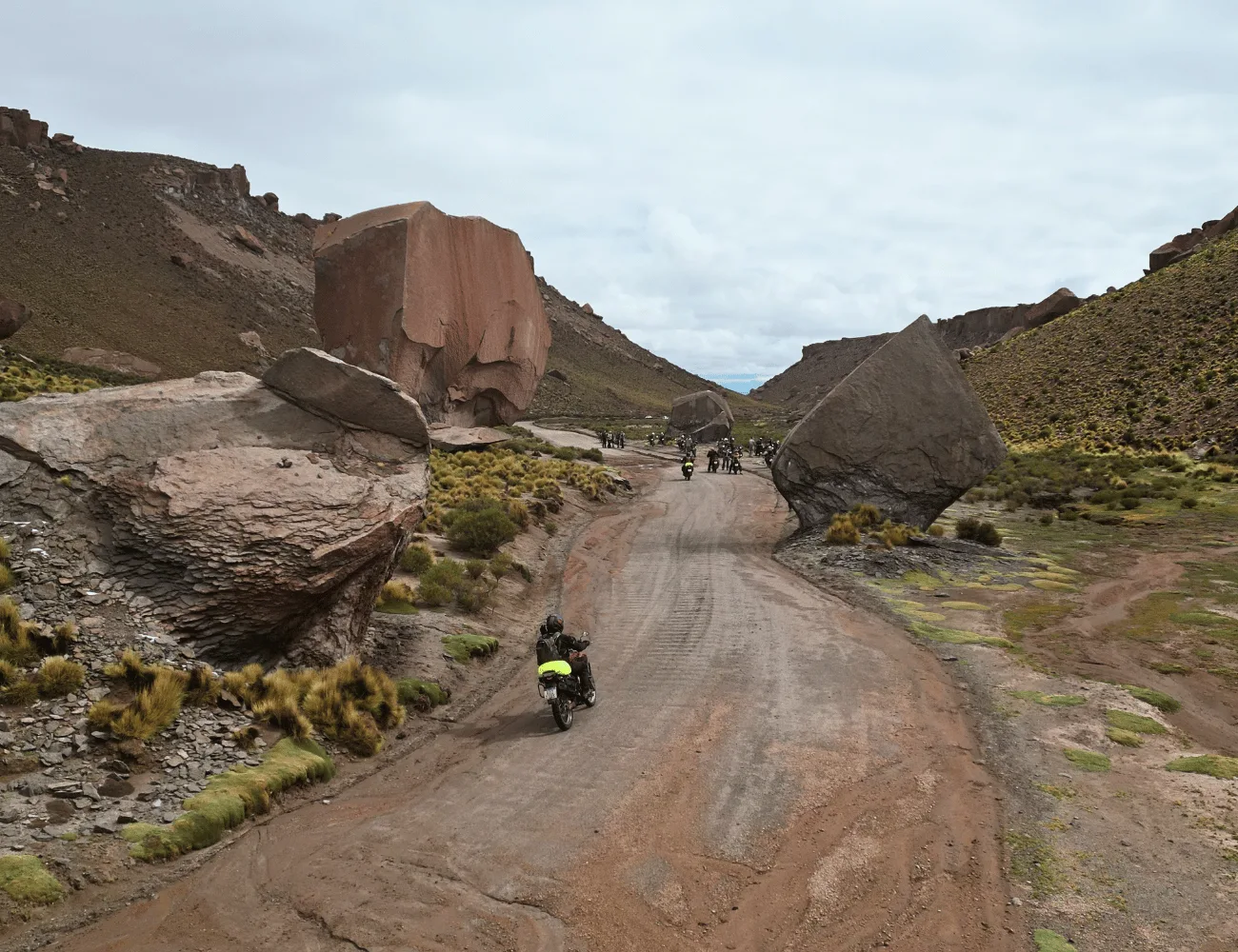
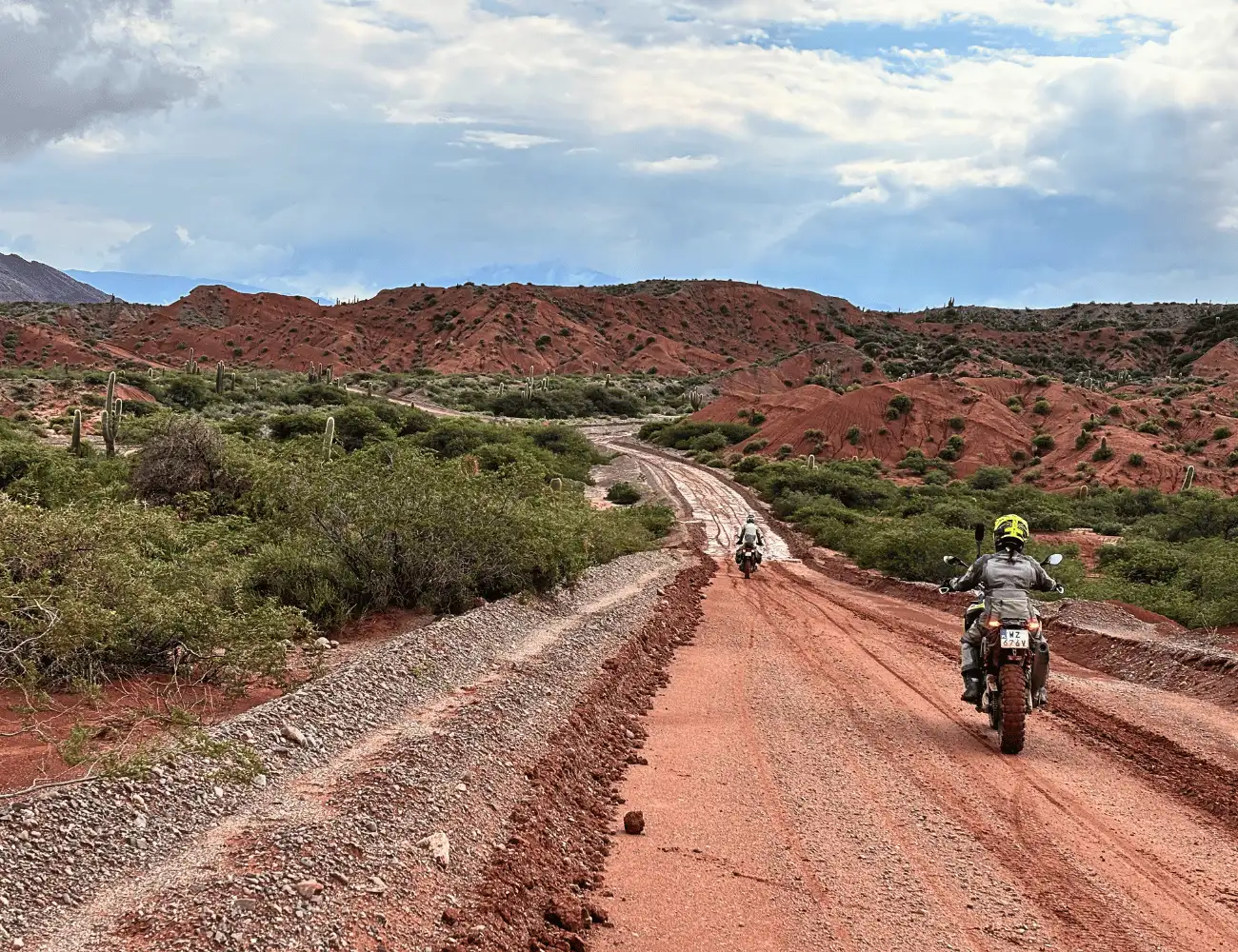
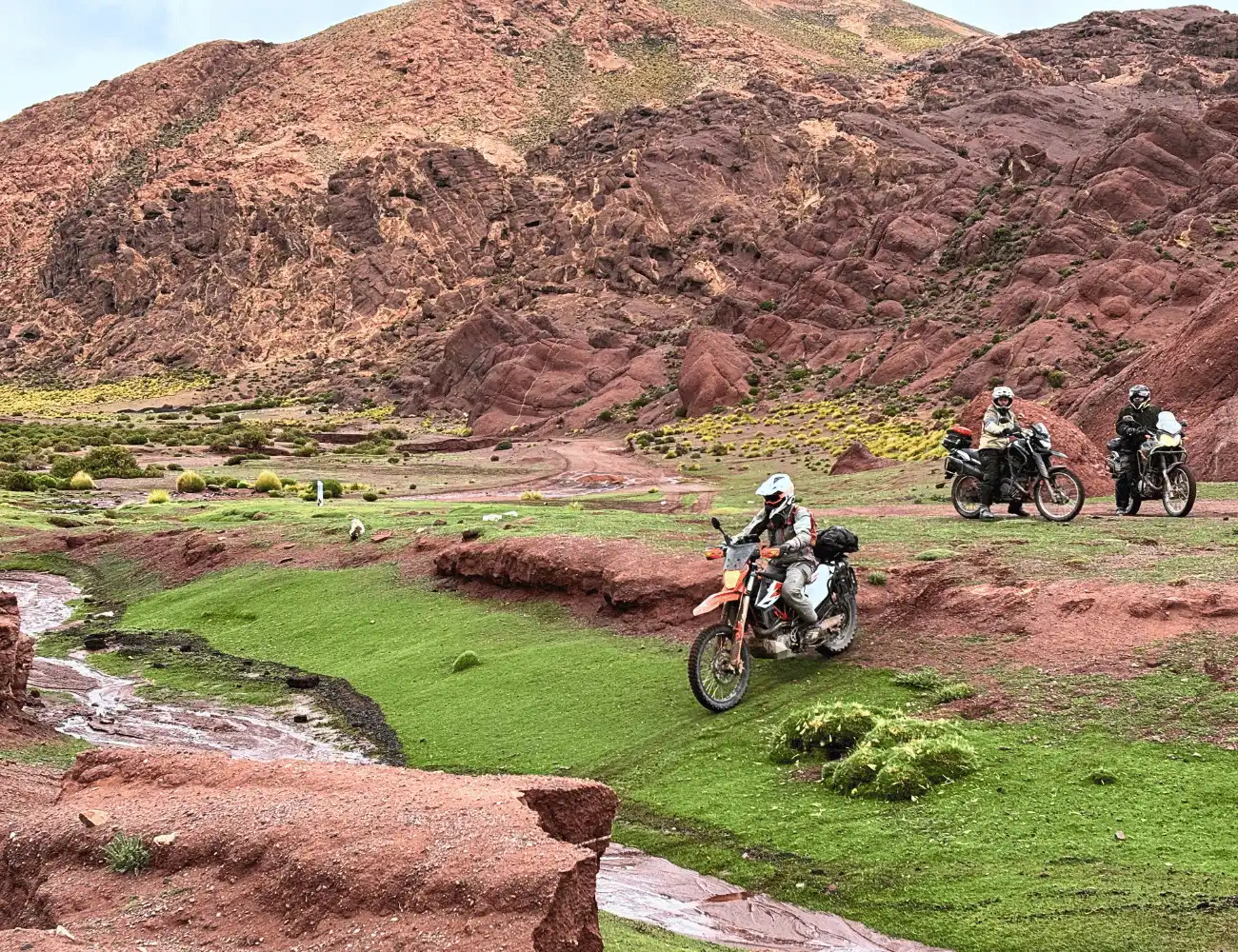
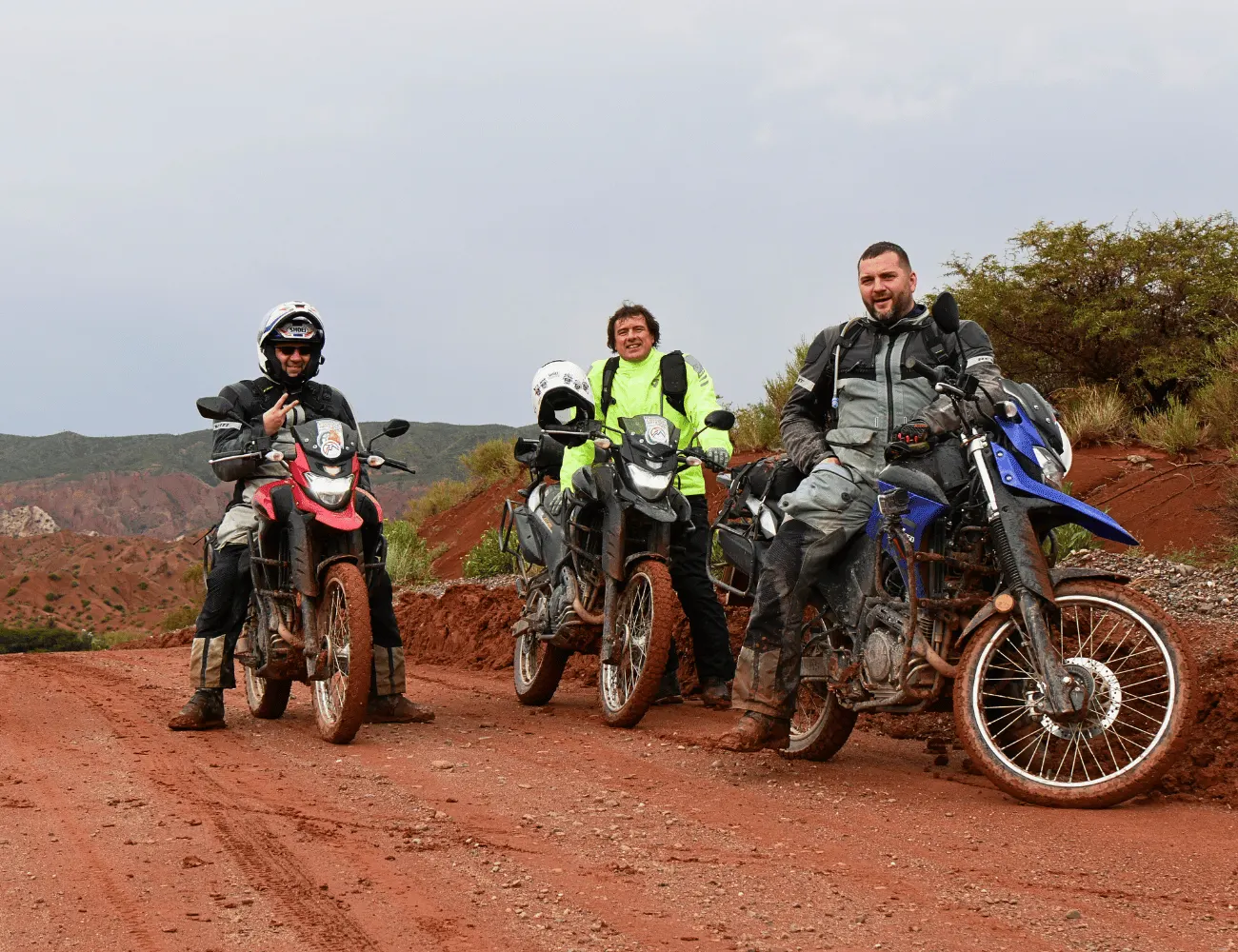
The road was slick with mud, the red earth clung to our tyres, and a few harmless falls only confirmed that in places like this, a lightweight motorcycle is a blessing. The small single-cylinder XTZs weighed around 140 kilograms and were easy to pick up, which made a real difference in these conditions.
By evening, we reached San Antonio de los Cobres, a mining town sitting at 3,750 metres above sea level. That was the moment when the altitude began to feel truly real.
ALTITUDE, COLD AND EMPTINESS BETWEEN ARGENTINA AND CHILE
The next day took us to San Pedro de Atacama. It was one of those stages that stays with you for a long time: more than 400 kilometres, much of it above 4,000 metres, in complete isolation from civilisation.
In the morning, the temperature was just 6°C. At that altitude, with the wind cutting through, it is not a “pleasant chill” but a cold that reaches deep into your body very quickly. And the day was only just beginning.
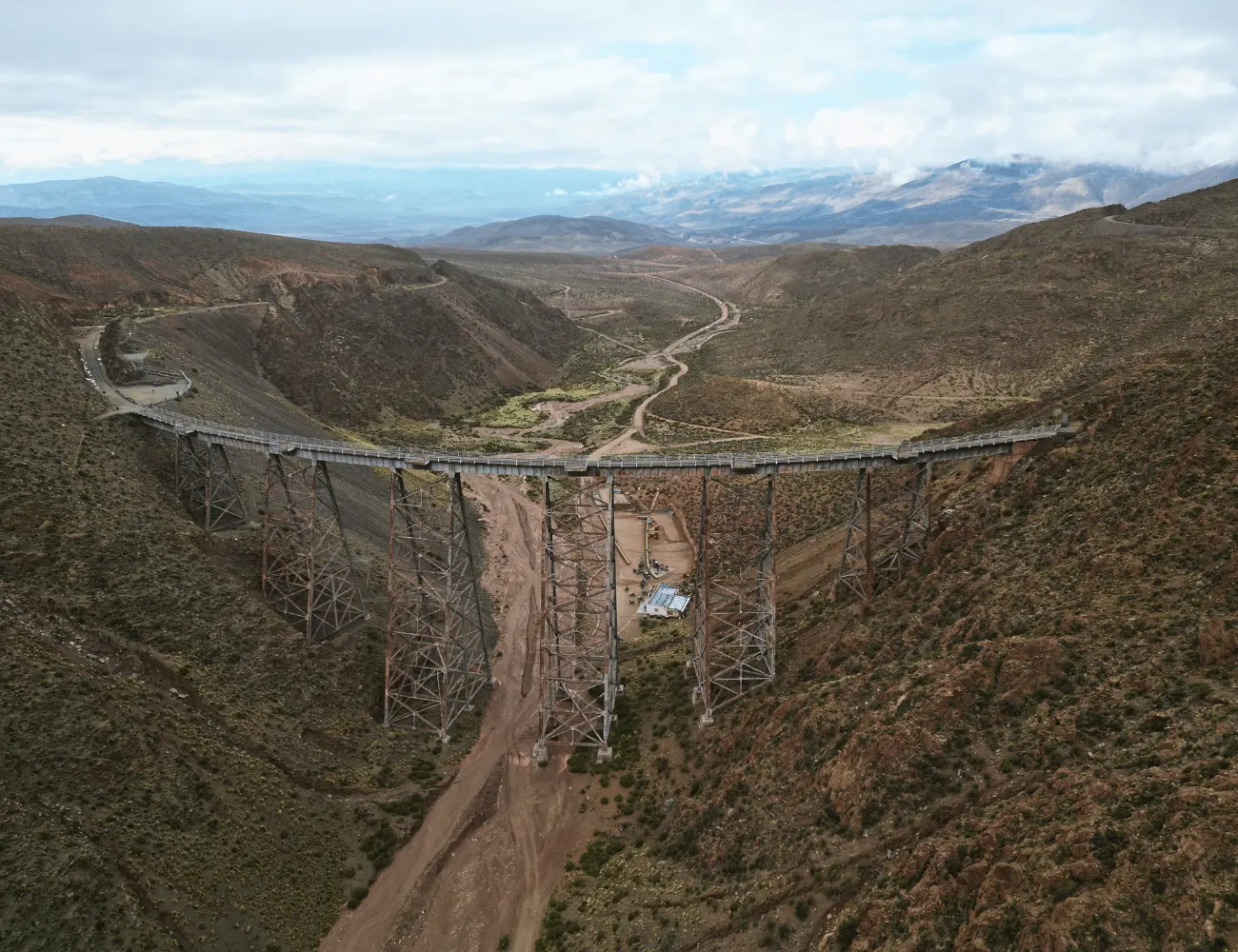
The first 140 kilometres followed a route through the Andes. There was no phone signal, no internet, no power lines — virtually no trace of human presence at all. For hours, the only points of reference were the road, the mountains and the sky.
Around midday, we stopped at a restaurant that looked like an apparition rising out of nowhere. After hours of riding through emptiness, a stop like that feels almost like luxury. Some of the group immediately went for an ice-cold beer, while others, making use of the satellite Wi-Fi, tried to reconnect with the outside world as quickly as possible.
THE CHILEAN BORDER AND TROUBLE WITH THE SUPPORT VEHICLE
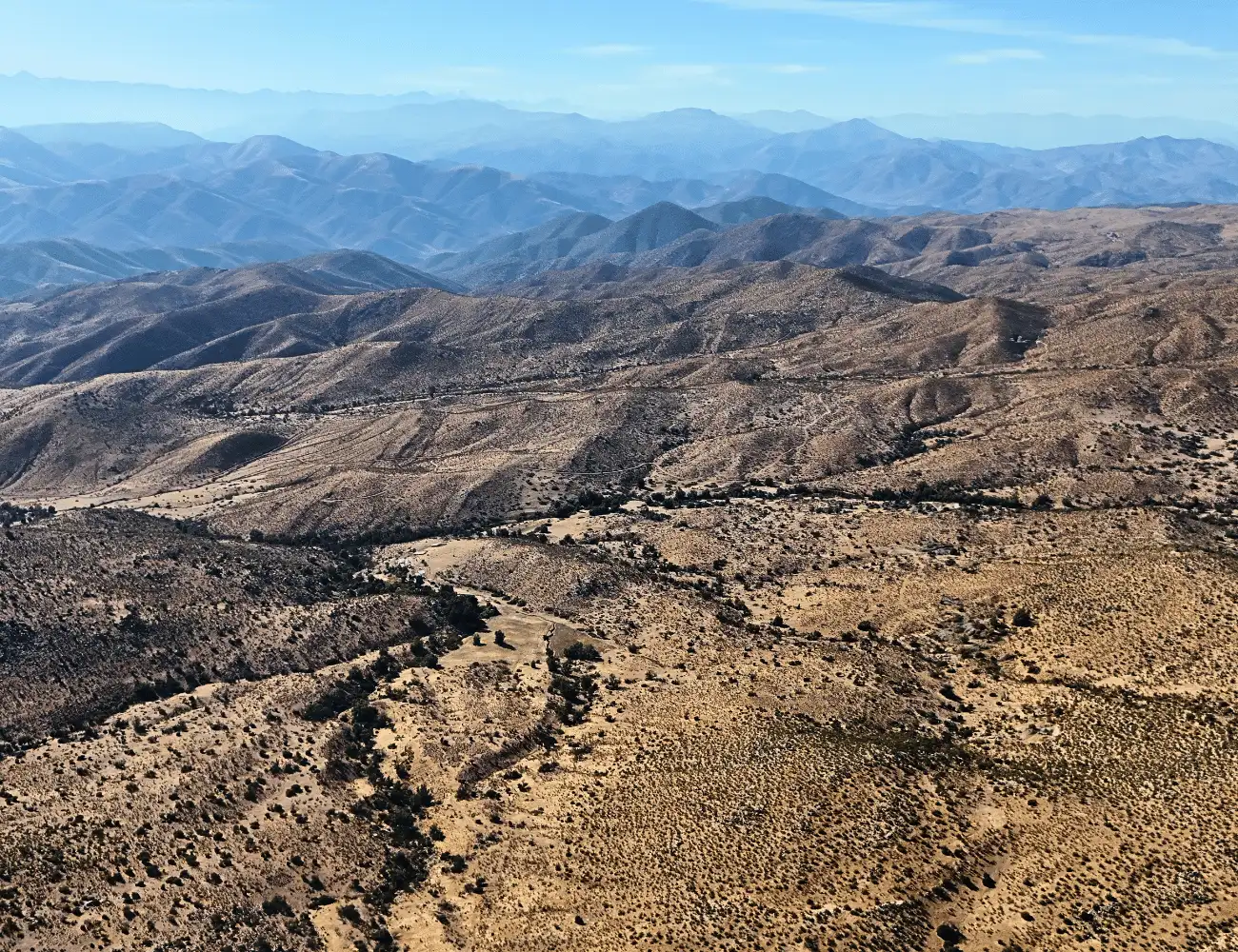
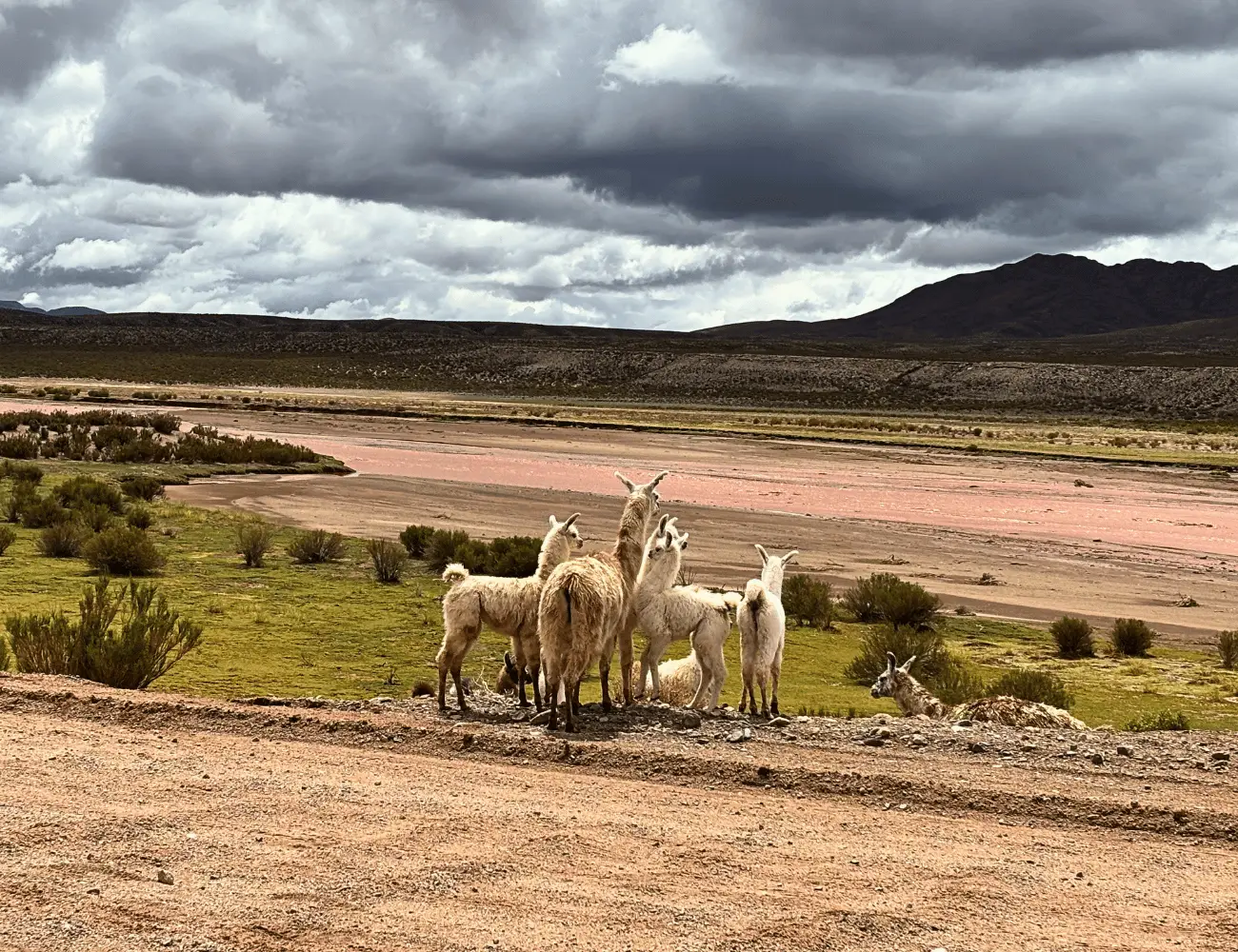
Crossing the border by motorcycle went smoothly. On the Chilean side, asphalt was already waiting for us, along with a completely different landscape. The intense colours of the Argentine Andes disappeared, replaced by beige tones, dry hills, pale shrubs and the almost lunar atmosphere of the Atacama Desert. Along the way, we spotted the first llamas and the distinctive warning signs announcing that there would be no signal for the next 130 kilometres.
When we arrived at the hotel in San Pedro de Atacama, we learned that the support vehicle had been held up at the border. Argentine customs officials had decided to detain it over supposedly missing parts. It was not about a bribe or some classic “border misunderstanding”, but rather a case of plain bureaucratic overzealousness.
The situation quickly became serious. The luggage had to be unloaded, the vehicle turned back, and Guy stayed behind to watch over all the equipment. Ola immediately set off from the hotel in an arranged pickup truck towards the border to collect our bags. In the end, everything reached the hotel only late in the evening, and after several hours spent at altitude, Guy was literally chilled to the bone.
That is what travel in South America looks like when everything stops being a “tourist product” and starts becoming a real expedition.
A Breathing Space in San Pedro de Atacama
Thankfully, the following day was set aside for rest. Some of the group went out to explore the area around San Pedro de Atacama, while others finally had the chance to unwind by the hotel pool. After several days of cold and high altitude, the dry, pleasant warmth of the Atacama felt almost shocking.
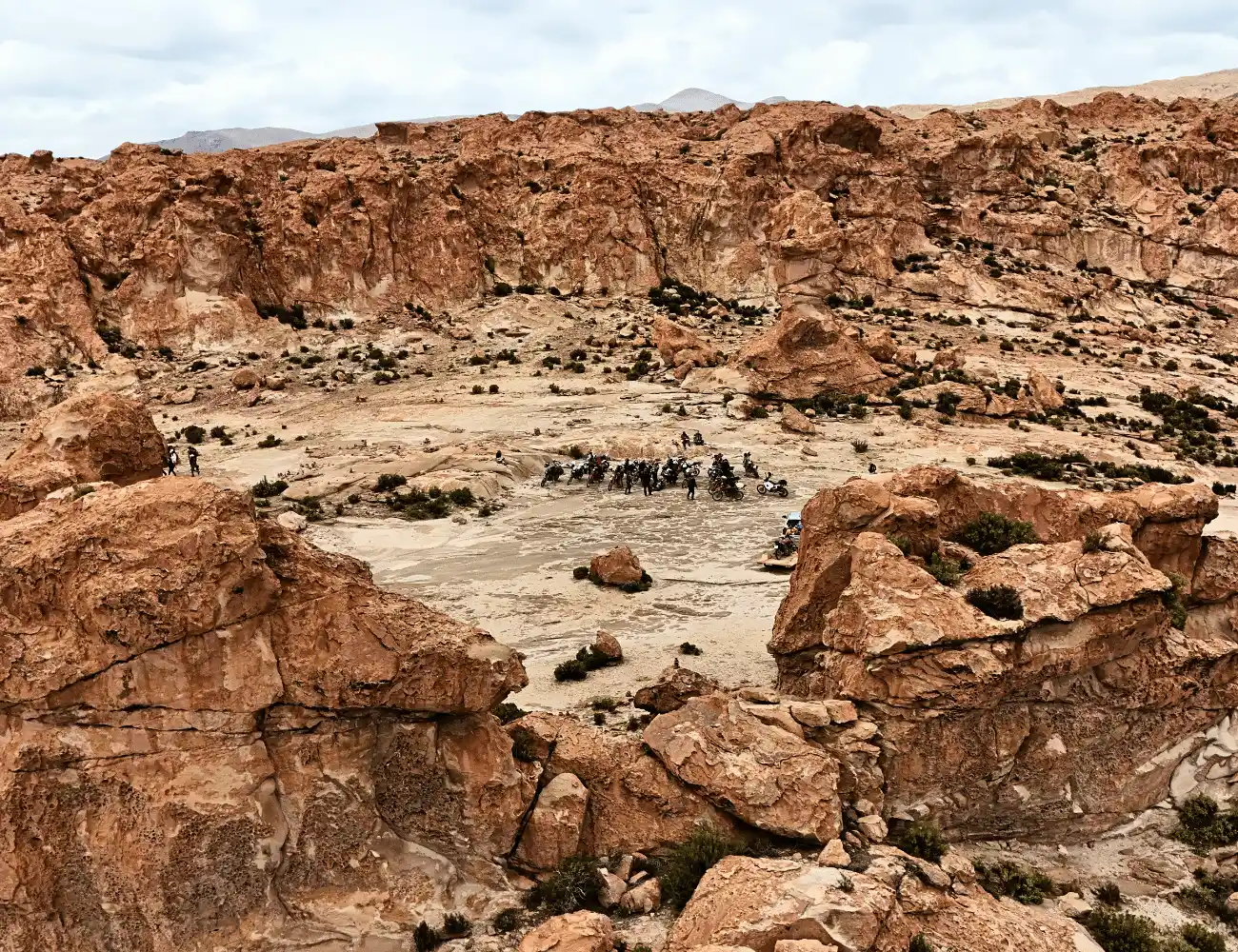
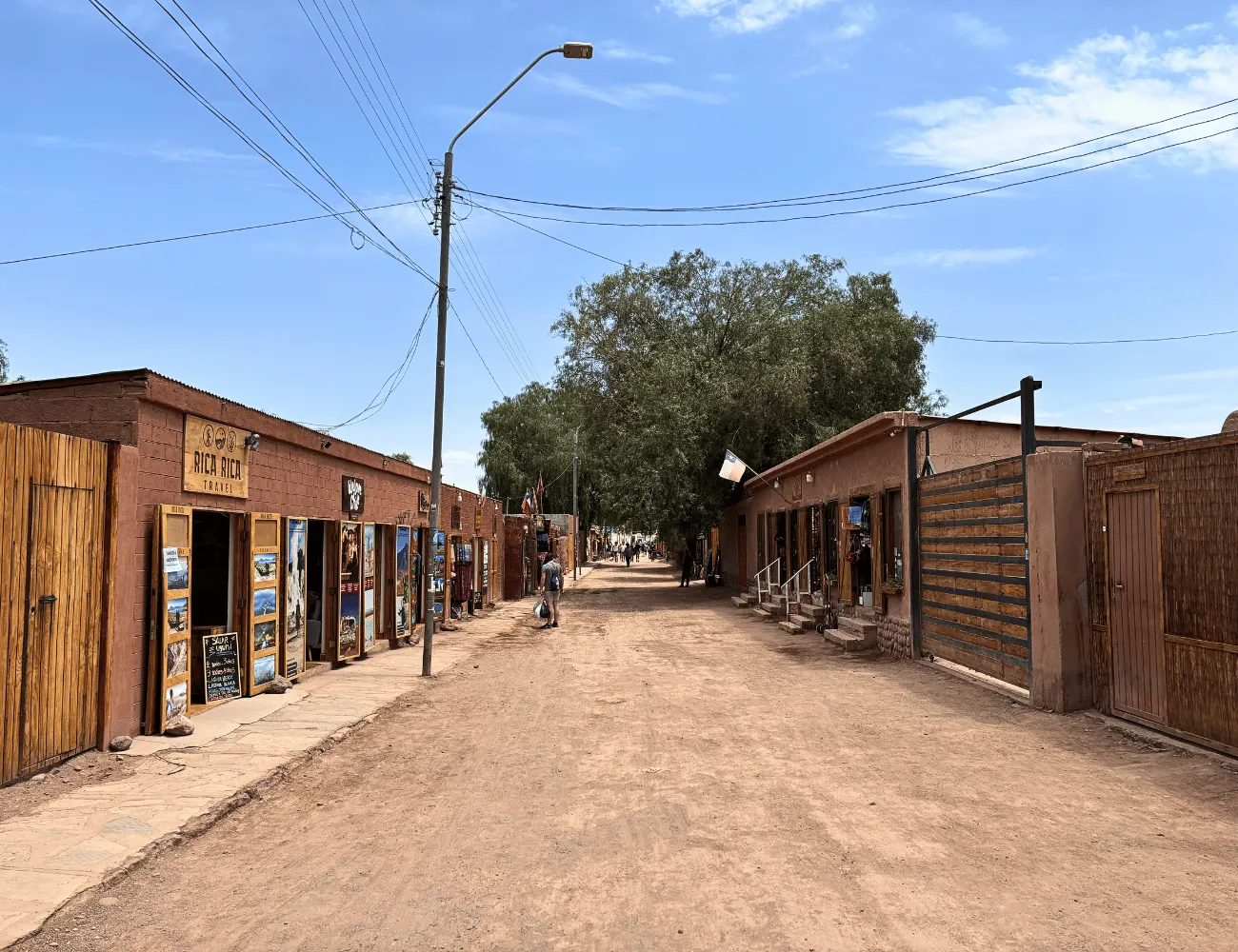
San Pedro de Atacama is known for landscapes that seem to belong to another planet: valleys, geysers, lagoons and vast desert expanses. For many travellers, it is an essential stop on any journey through Chile. For us, above all, it was a much-needed pause before crossing into Bolivia.
ENTERING BOLIVIA — THIS IS WHERE THE ALTIPLANO TRULY BEGINS
To cross into Bolivia, we headed back for a stretch towards Argentina before turning for the Hito Cajón border crossing, which lies at 4,480 metres above sea level.
The formalities took almost four hours. In a room with just a few chairs, no comforts and no sense of urgency, half the group began to feel the altitude quite seriously. At that elevation, a headache is still the “milder version”. Stomach problems or a stronger physical reaction can very quickly turn this stage into a fight for survival.
But the moment we got moving again, it all felt worth it.
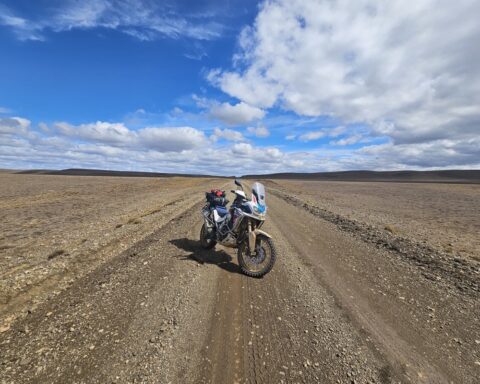
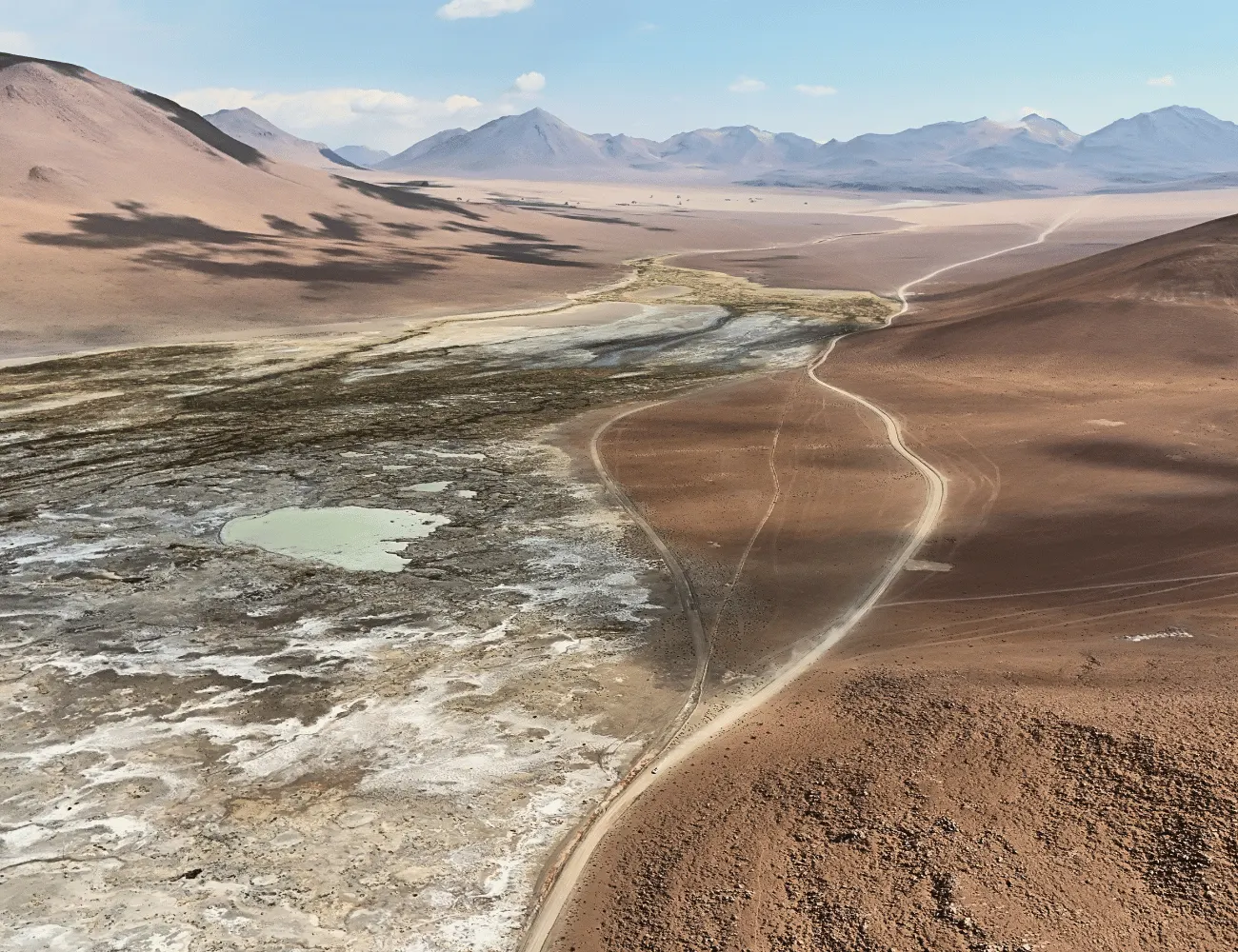
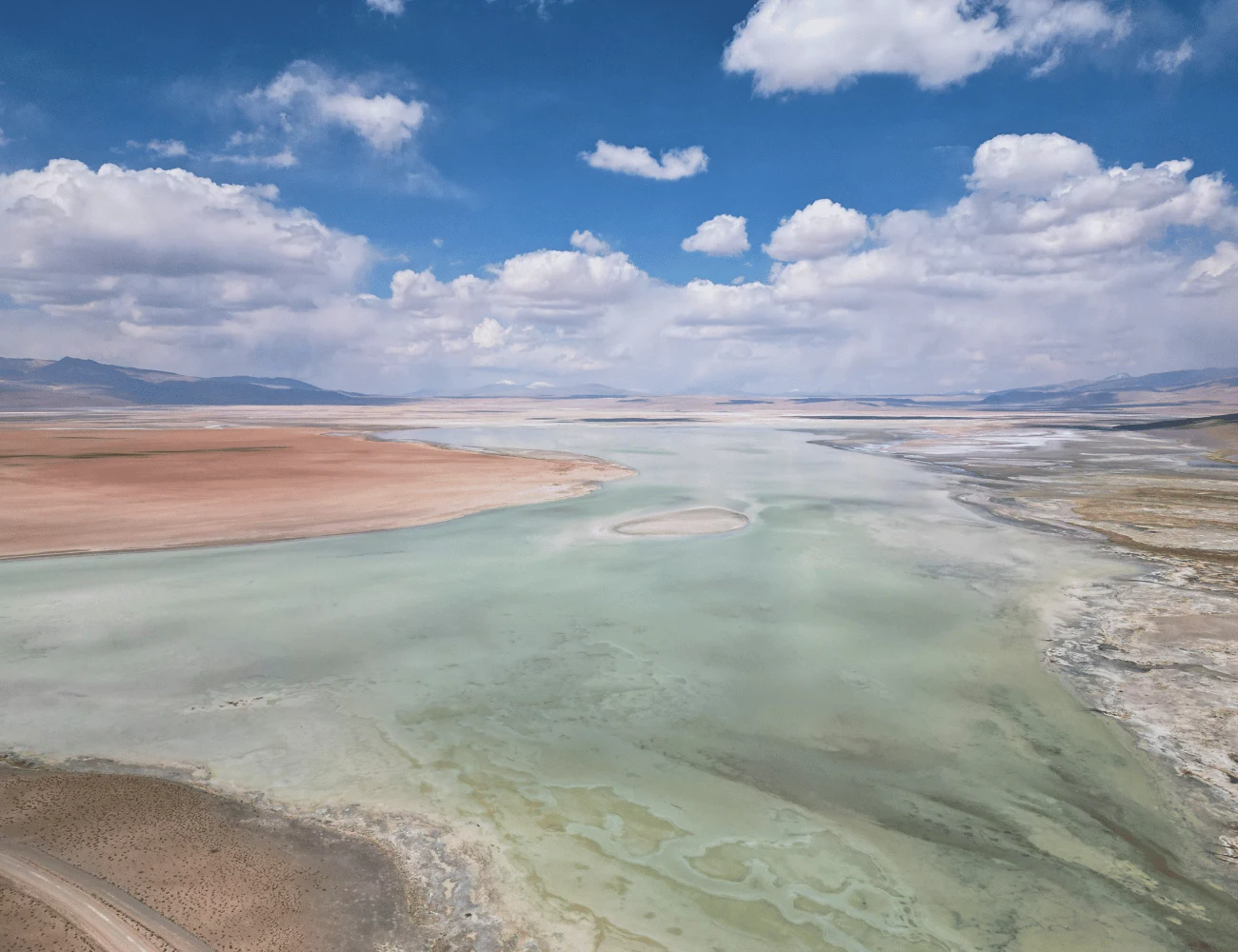
The Bolivian Altiplano made a tremendous impression on us. The route ran past lakes in unreal colours, across empty expanses with no infrastructure, no buildings and barely any trace of human presence. Gravel, sand, corrugations and endless space. For many of us, it was the most beautiful landscape of the entire expedition.
Our destination was Quetena Chico, a small village sitting at around 4,200 metres above sea level. It is one of those places that shows what life looks like truly far from everything. A handful of houses, a school, a few tiny shops, no phone signal, no internet, and daily life shaped by temperatures that are rarely kind.
UTURUNCU — A PLAN FOR 6,000 METRES AND A COLLISION WITH REALITY
Uturuncu Volcano, rising to 6,008 metres above sea level, was one of the most symbolic objectives of the entire expedition. By motorcycle, it is possible to climb remarkably high — in theory, even to around 5,700 metres — before covering the final stretch on foot.
It sounds perfect. The problem is that mountains have no interest in our plans.
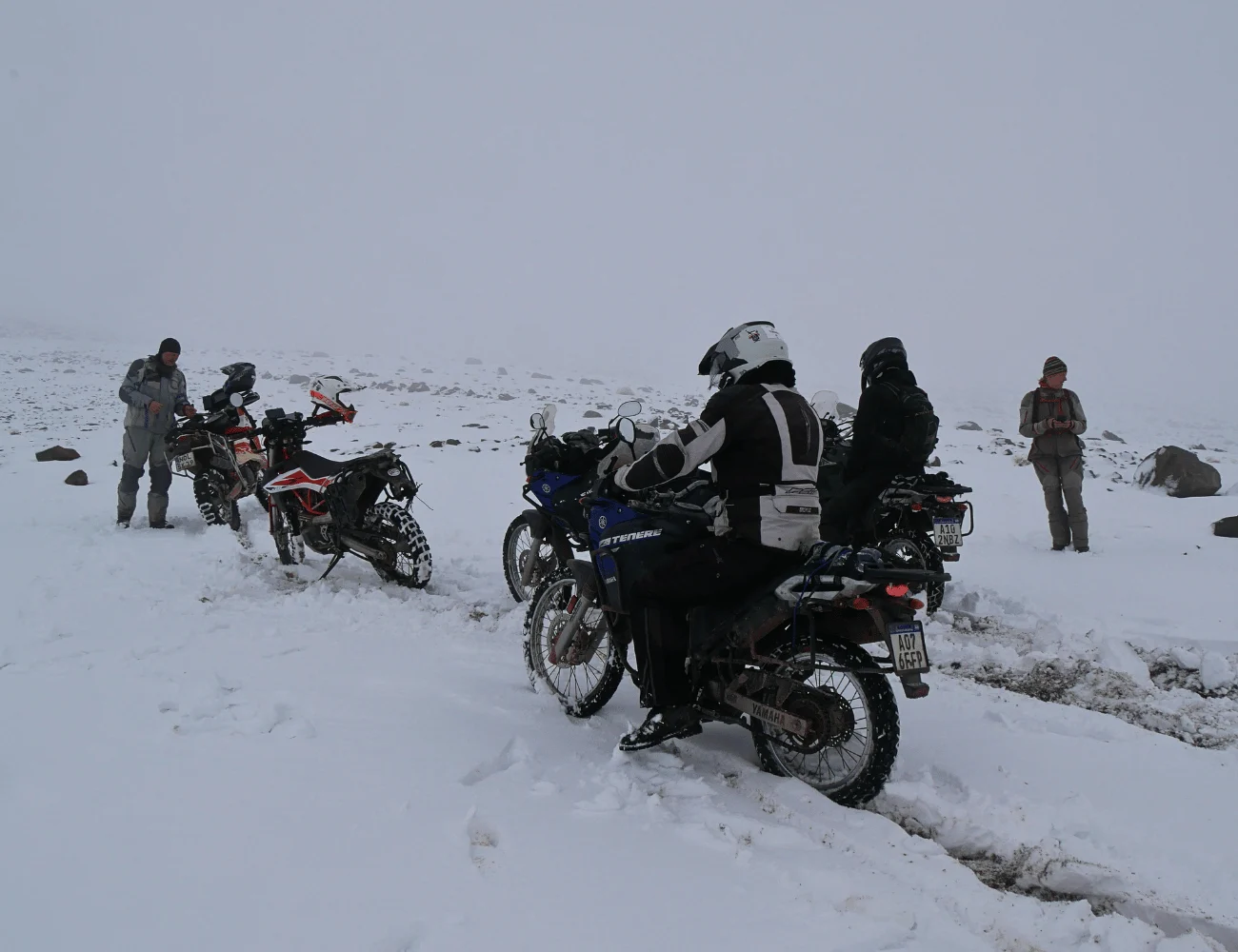
From around 5,000 metres, the track began to disappear under snow. Part of the group struggled to reach the first parking area at 5,200 metres, but beyond that there was no point in taking unnecessary risks. Nearly 10 centimetres of snow lay across the route, and conditions higher up were even worse.
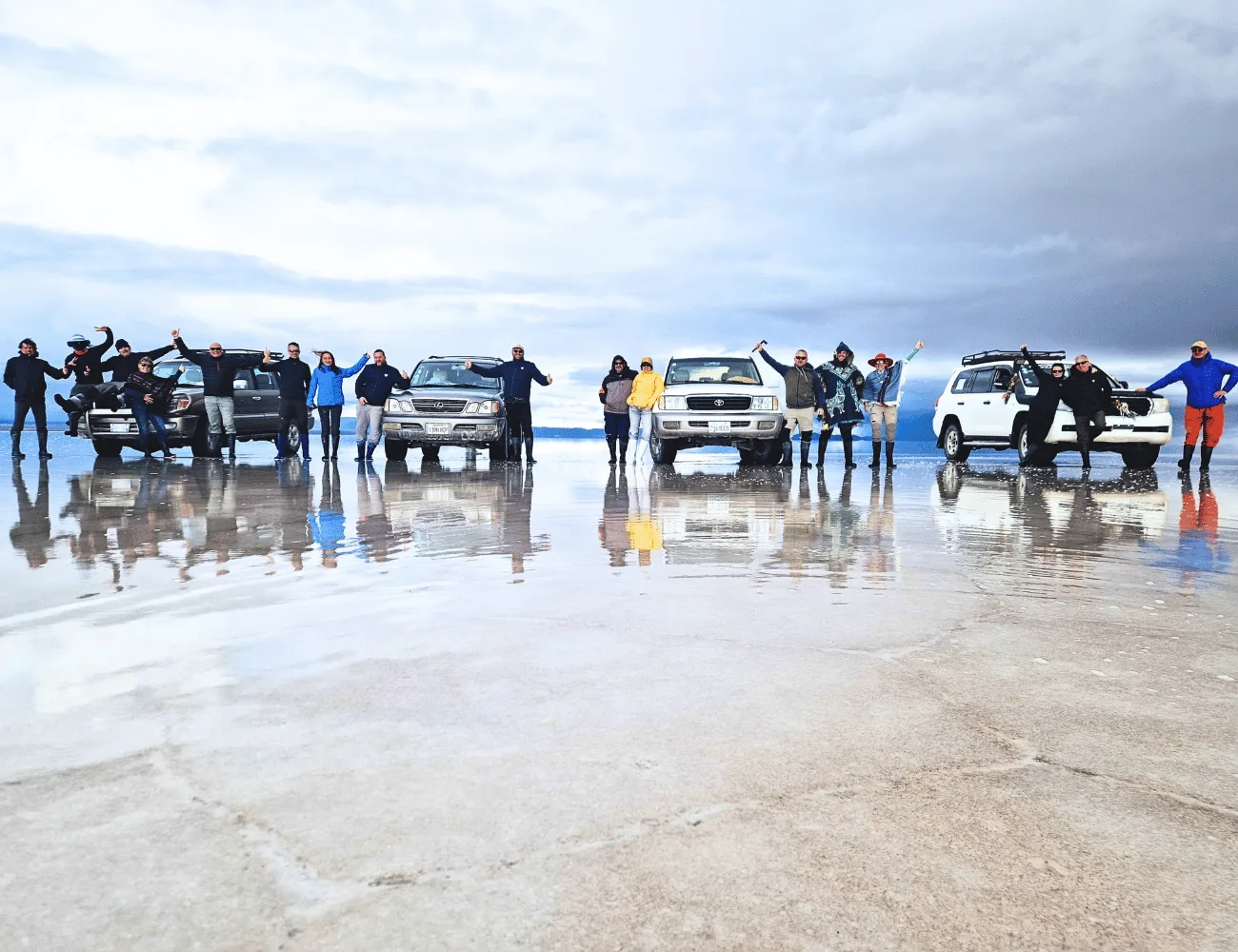
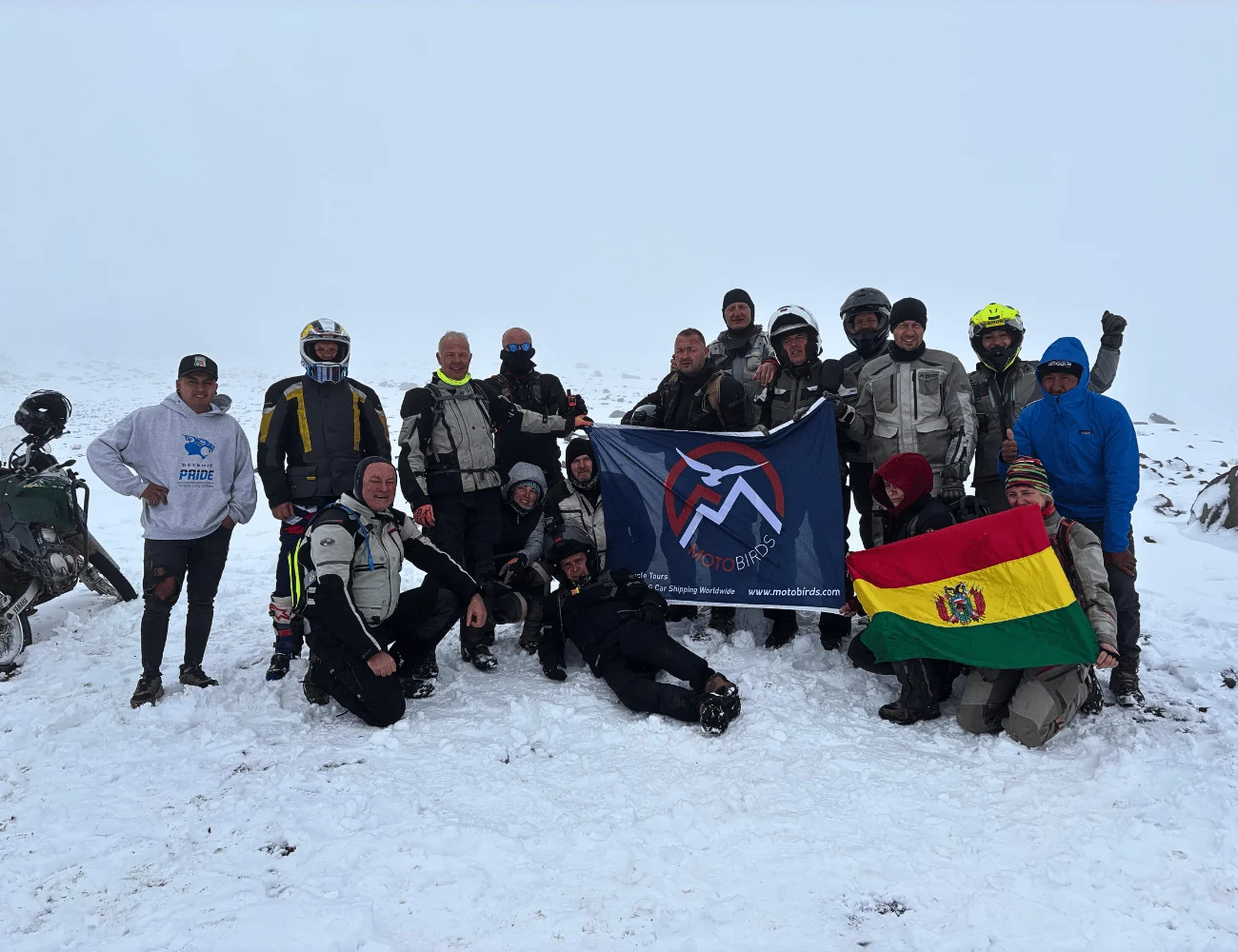
So we did not reach 6,000 metres. Instead, we took a group photo in a landscape that was extraordinary enough on its own. Sometimes, travel is not about “ticking off” a goal, but about recognising the limit, accepting it, and turning back.
The afternoon in Quetena Chico unfolded in a way that felt true to the spirit of the expedition: sunshine, an aperitif in front of the hotel, and complete isolation from the outside world. In a place this remote, even an ordinary stop begins to feel like an event.
UYUNI AND THE SALAR DE UYUNI — THE WORLD’S LARGEST SALT FLAT
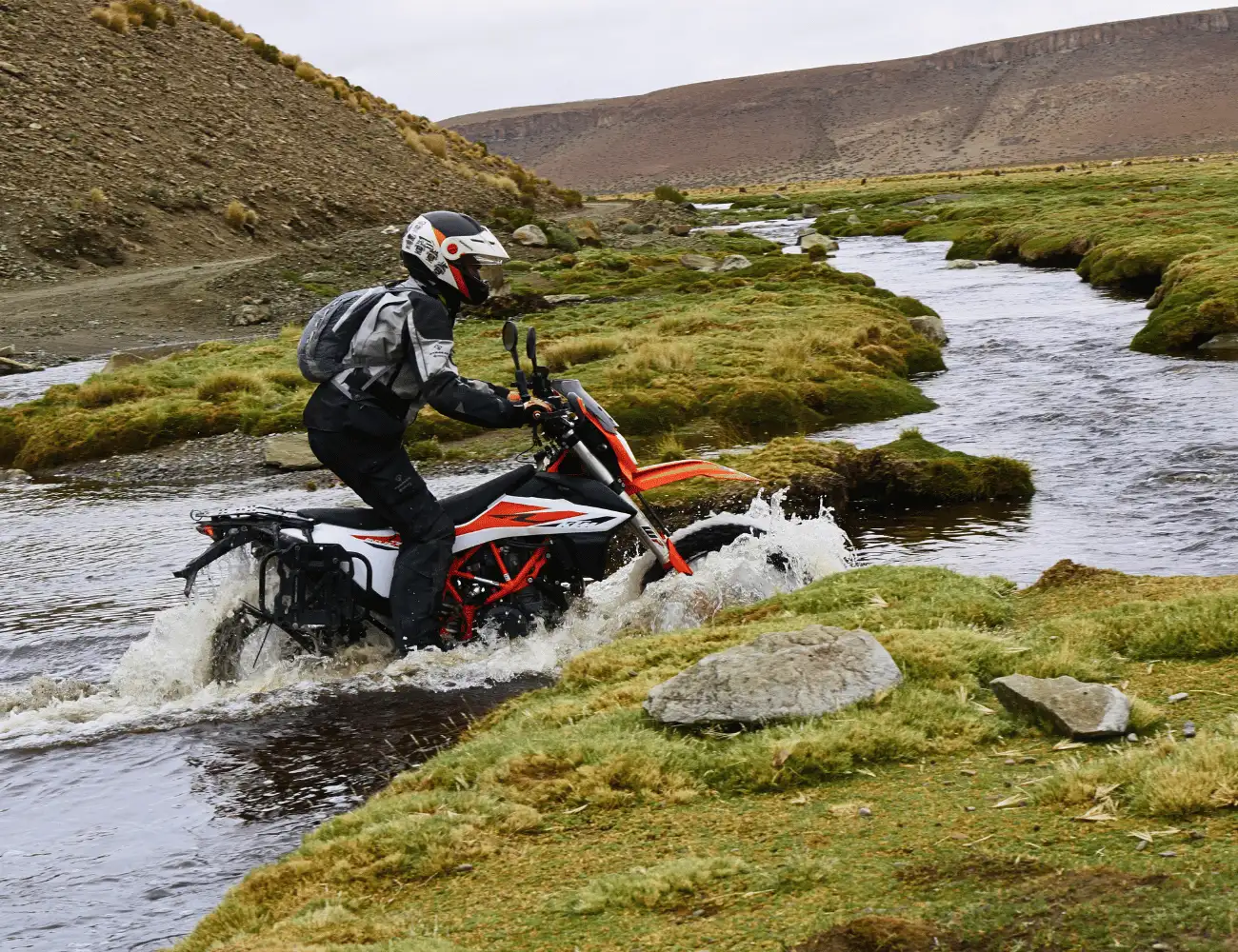
The next stage took us to Uyuni — around 330 kilometres, with several river crossings, mud, an increasingly dark sky, and a road that at times demanded complete concentration.
Uyuni itself is not especially captivating. It is a town that feels more functional than beautiful — dusty, chaotic and rather austere. But it is from here that you set out for the Salar de Uyuni, the largest salt flat in the world and one of Bolivia’s most recognisable landmarks.
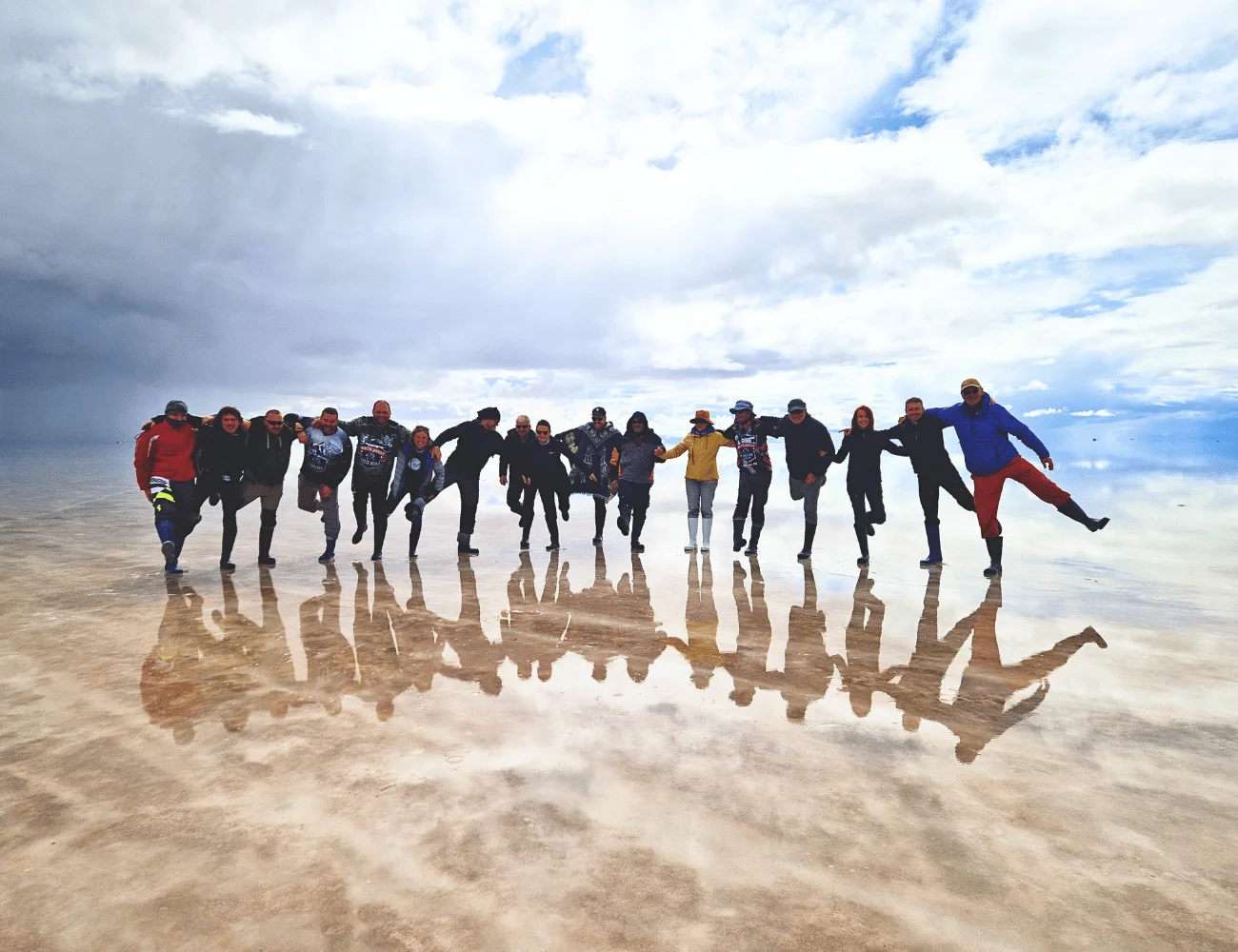
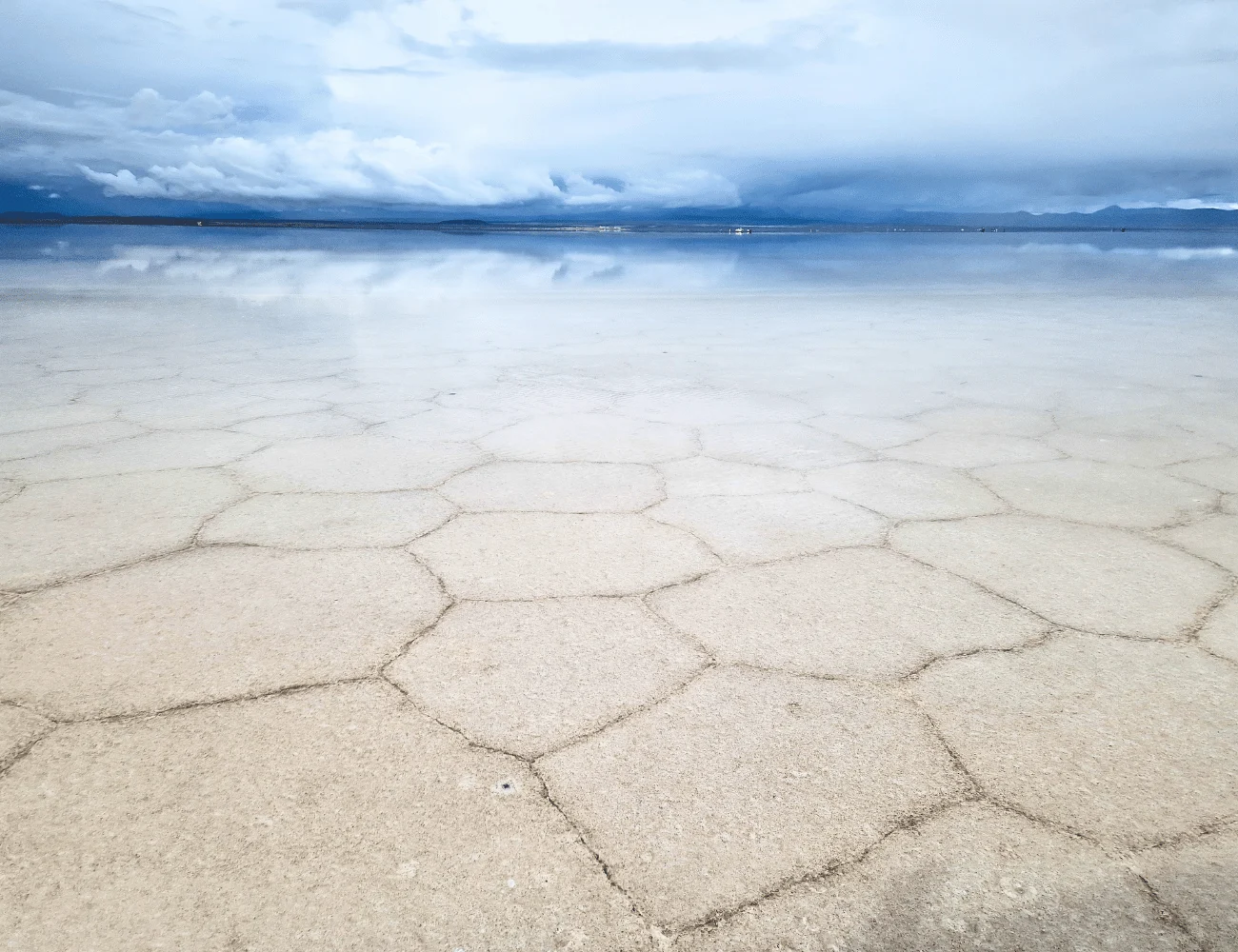
Unfortunately, just as before, the weather had plans of its own. The salar was flooded. Riding onto it by motorcycle would have meant risking serious damage caused by the salt. There was simply no point in attempting it.
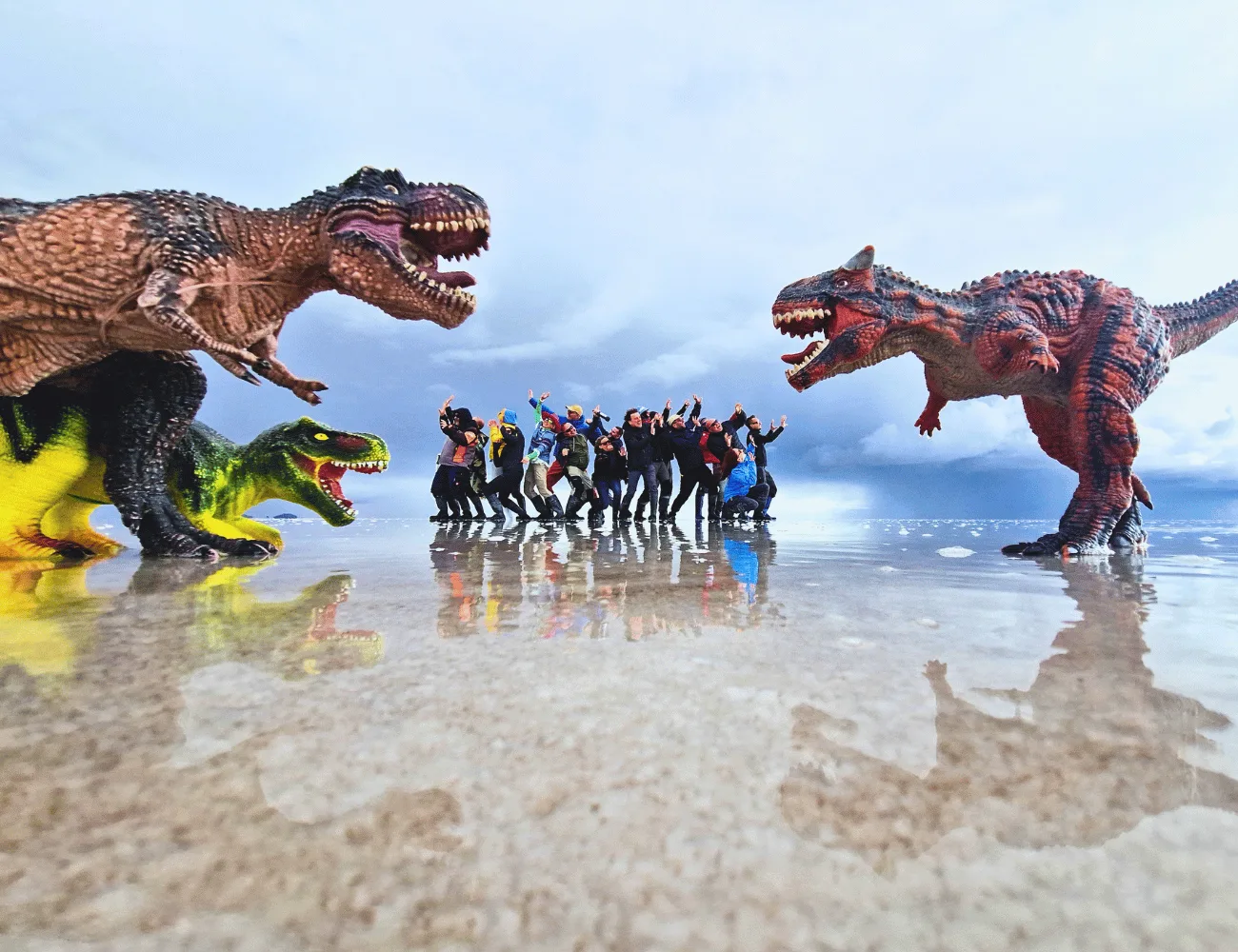
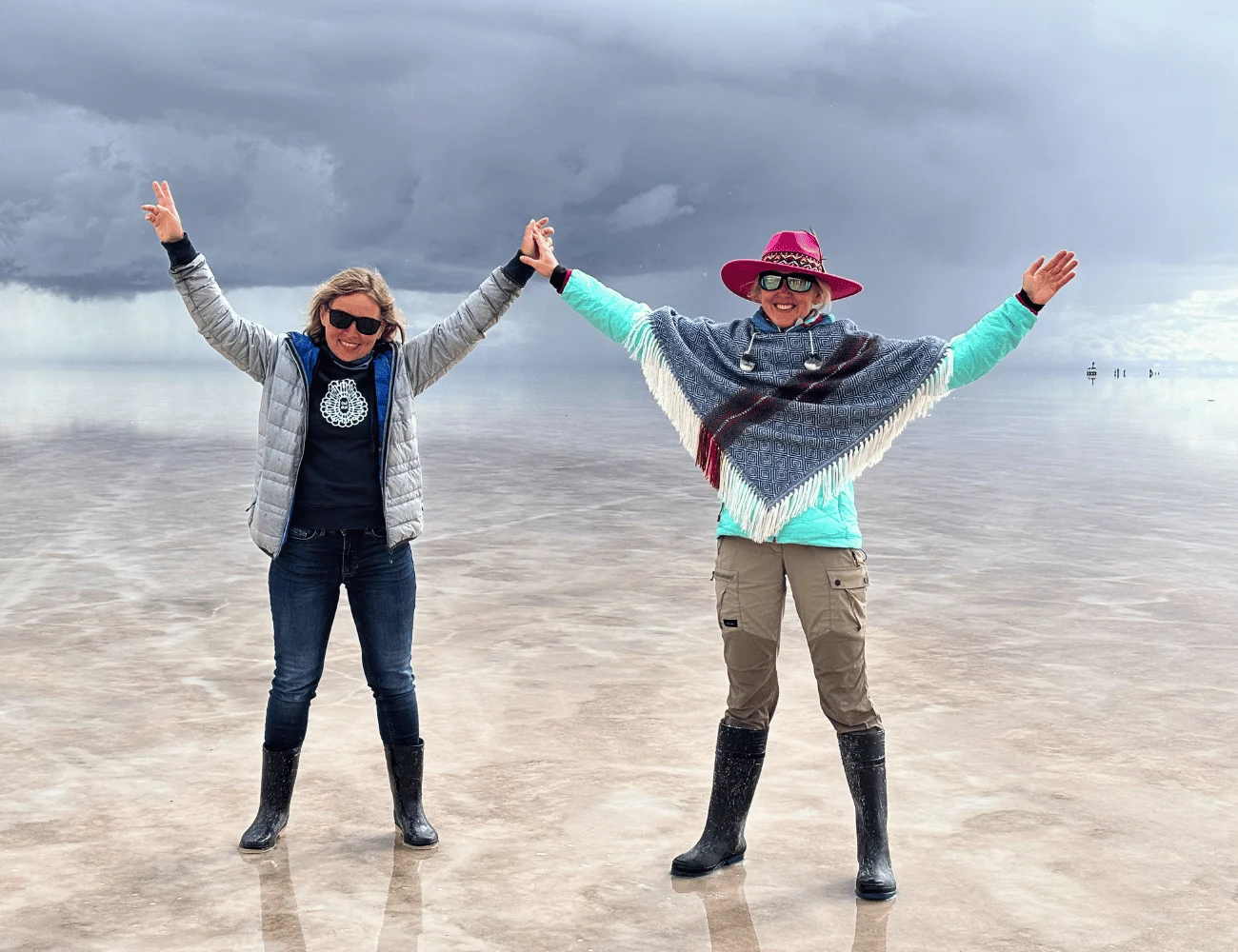
So instead of crossing it on two wheels, we climbed into 4x4s. Wearing rubber boots, like hundreds of other tourists, we set off to see this vast white expanse up close. The view was still striking, but it must be said honestly: Salar de Uyuni at the height of the tourist season no longer delivers the feeling of a remote wilderness adventure. It is a spectacular place, but today it is also an extremely popular one.
Even the famous train cemetery was so crowded that it was difficult to find a frame without a crowd of people posing for photos.
IN BUTCH CASSIDY’S FOOTSTEPS — THE TOUGHEST DAY OF THE ENTIRE EXPEDITION
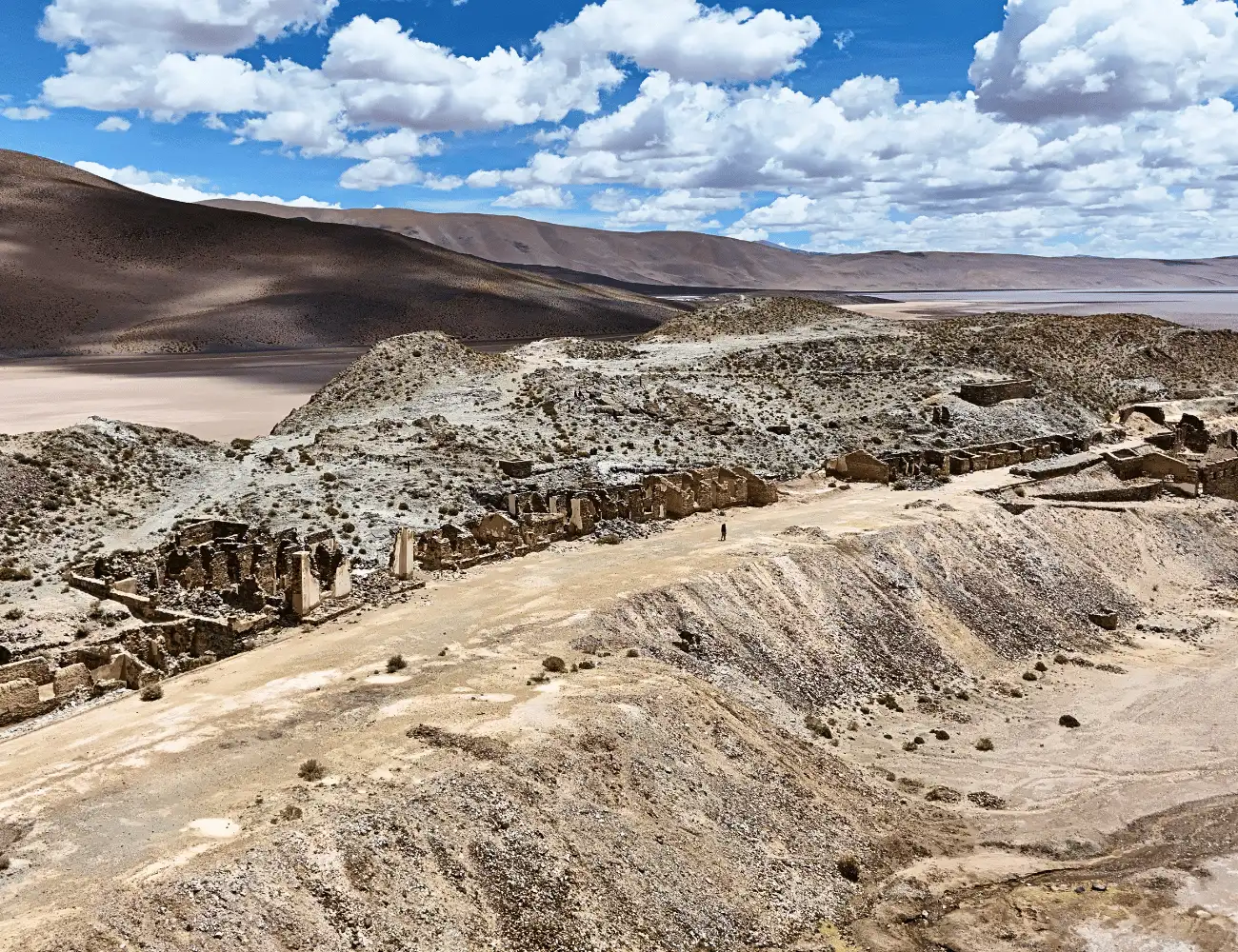
One of the most memorable stages was the ride towards Tupiza, with a detour to San Vicente — a small mining settlement which legend associates with the death of Butch Cassidy.
After overnight rain, the roads around Uyuni had turned into muddy traps. Even so, we set off. Reaching San Vicente was already demanding, but what happened afterwards ensured that this would be a day none of us would forget.
The Butch Cassidy Museum turned out to be a single small room filled with a few dusty objects, an old typewriter, several photographs and an air of complete improvisation. It felt more like a curious absurdity than a museum in any real sense.
The real challenge began after we left San Vicente. The road to Tupiza grew steadily worse until we reached a section that had been destroyed by the river. After scouting it out, the decision was made to turn back. The risk of getting stranded there overnight at that altitude was simply too great.
Then the rain began. We retraced our route through the mud, climbed back up to nearly 4,800 metres, soaked through and frozen. After that, there was still the paved road to Tupiza, darkness falling, and fuel tanks that were almost empty.
It was one of those days after which a hot shower and a simple meal feel like the luxury of a five-star hotel.
RETURN TO ARGENTINA — BUREAUCRACY, COLD AND THE LAST OF THE MOUNTAINS
The Argentine border greeted us with nearly three hours of formalities, dashing between counters, and repeated attempts to complete online forms over unreliable Wi-Fi. There was no paper version. It was smartphone or nothing.
Once back in Argentina, there was still plenty of riding ahead of us: asphalt, strong winds, black storm clouds, and motorcycles that kept doing their job with admirable resilience despite the altitude, the cold and the long days on the road.
The following stages led us through mountains, rivers, mist and remote settlements. In one of them — Caspala — we were surprised to find that although there was absolutely no mobile signal, the Wi-Fi was working. It was one of those South American paradoxes that only stop feeling surprising after a while.
Then the landscape changed once again. We descended from the harsh, high-altitude plateaus into the greener, subtropical surroundings of Calilegua National Park. After days spent in the cold and at elevation, it felt almost like entering another world.
NOT EVERYTHING WENT TO PLAN — AND THAT IS EXACTLY WHY IT WAS WORTH IT
We did not reach the highest pass. We did not ride across the Salar de Uyuni by motorcycle. We did not make it as high up Uturuncu as we had planned.
And yet it was precisely those “unfinished” moments that gave this expedition its real weight and authenticity.
Because the best memories from journeys like these rarely come from a plan executed to perfection. What stays with us are the detours, the river crossings, the cold, the mud, the struggle with altitude, the laughter after a hard day, and the feeling that together we made it through something truly significant.
This was a motorcycle expedition across the Altiplano in the truest sense of the word: beautiful, raw, at times uncomfortable, utterly unpredictable, and absolutely unforgettable.
ALTIPLANO WITH MOTOBIRDS — WHO IS THIS KIND OF EXPEDITION FOR?
A motorcycle journey like this through Argentina, Chile and Bolivia is far from an ordinary tour. It is designed for travellers who love vast open spaces, riding beyond the beaten track, and who do not expect everything to unfold exactly as planned.
You need to be prepared for changing weather, high altitude, simple accommodation in some places, and several days that feel more like an expedition than a holiday. In return, however, you gain something that conventional trips rarely offer: a genuine experience of the road.
EXPEDITION LOGISTICS AND PRACTICAL INFORMATION
Citizens of European countries do not need a visa for Argentina, Chile or Bolivia. A passport valid for at least six months is sufficient.
The expedition included 14 nights of accommodation with breakfast, motorcycle rental, insurance, technical assistance, support in the event of a breakdown, trip photography, and a commemorative T-shirt. On top of that, participants needed to budget separately for flights, fuel, meals and personal expenses.
For those who prefer to travel on their own motorcycle, MotoBirds also offers motorcycle transport to South America. On this particular expedition, several participants chose exactly that option.
MOTOBIRDS — GUIDED MOTORCYCLE EXPEDITIONS AND MOTORCYCLE SHIPPING WORLDWIDE
MotoBirds specialises in guided motorcycle expeditions and worldwide motorcycle shipping. For years, we have been leading riders through some of the most spectacular regions on the planet — from South America and the Himalayas to Africa and Asia.
We organise both classic group expeditions and women-only tours, created for female riders looking for adventure in a friendly, supportive atmosphere.
ARTICLE AUTHOR:
David Zimmernam — Swiss journalist, motorcyclist and traveller. He took part in the “Altiplano at Full Throttle 2025” expedition organised by MotoBirds. This article is David’s personal account of that journey.
Newsletter subscribers get more!
Join MotoBirds Soaring Newsletter and don't miss any important content, gear tests, travel inspirations and newest offers in the future! We'll also let you know about fresh publications on our blog.